
FSANZ 2025 Poster Presentation Pilot Survey

Enhancing IVF Outcomes Through Integrative Care: The Role of Naturopathy & Acupuncture: Pilot Survey Results from IVF Patients and Specialists

FSANZ Conference September 2025

FSANZ 2025 Enhancing IVF Outcomes Through Integrative Care: The Role of Naturopathy & Acupuncture


Presenter contact information

For further information about our pilot study or Fertile Ground Health Group please contact:


Fertile Ground Health Group

P: 03 9419 9988

www.fertileground.com.au


Charmaine Dennis 

BHSc (Nat), PGCert (Repro Med)

Director | Naturopath

email:  charmaine@fertileground.com.au


Gina Fox

BHSc (Nat), MA (Repro Med)

Naturopath | Nutritionist

email:  gina@fertileground.com.au


Tina Jenkins

B.Nat), MA (Repro Med-with Excellence), B.A., Cert. Nat. Fert. Mgt., Grad Cert (Learning & Teaching)

Naturopath | Torrens University Clinical Supervisor (Naturopathy and Western Herbal Medicine)

email: tina@fertileground.com.au


Georgia Marrion

MHNut, BHSc (Comp Med), Adv Dip (Nat)

Naturopath | Nutritionist

email:  georgiamarrion@fertileground.com.au


Christina Tolstrup

BHSc (Chinese Med)

Acupuncturist  | Chinese Herbalist

email: christina@fertileground.com.au


Survey Results 

Patient Responses:


  • Emailed to the full Fertile Ground database → 13,091 active emails
  • 4283 opened emails, 421 clicks to links
  • 28 finalised survey responses reporting IVF treatment with collaborative care
  • Summary document linked

Collaborative Care in IVF for FG Patients – FINAL SURVEY RESULTS SUMMARY

IVF Specialist Responses:

  • Survey emailed to 13 IVF specialists/clinics with existing collaborative relationships with Fertile Ground
  • 8 responses received
  • Purposive sampling approach used to capture perspectives
  • Summary document linked

Collaborative Care in IVF for IVF specialists – FINAL SURVEY RESULTS SUMMARY

References 

Introduction – Collaborative Care Models

  1. Sehgal S et al. Integrative medicine utilization among infertility patients. Reprod Biol Endocrinol. 2023;21(1):71.
  2. LoGiudice JA, Massaro J. The impact of complementary therapies on psychosocial factors in women undergoing in vitro fertilization (IVF): a systematic literature review. Appl Nurs Res. 2018;39:220-228.
  3. Rayner JA, McLachlan HL, Forster DA, Cramer R. Australian women’s use of complementary and alternative medicines to enhance fertility: exploring the experiences of women and practitioners. BMC Complement Altern Med. 2009;9:52.
  4. Sharifi F, Roudsari RL. Complementary and alternative medicine use in infertility: a review of infertile women’s needs. J Educ Health Promot. 2022;11:195.

Discussion – Acupuncture in IVF

  1. Hullender Rubin LE. Point of Influence: What is the Role of Acupuncture in In Vitro Fertilization Outcomes? Med Acupunct. 2019;31(6):329-333.
  2. Manheimer E et al. Effects of acupuncture on rates of pregnancy and live birth among women undergoing IVF: systematic review and meta-analysis. BMJ. 2008;336:545-549. 
  3. Smith CA et al. Acupuncture performed around embryo transfer: systematic review and meta-analysis. Reprod Biomed Online. 2019;38(3):364-379.
  4. Wang X et al. Overview of systematic reviews of acupuncture for women undergoing IVF/ET. Front Public Health. 2021;9:651811.
  5. Amorim D et al. Acupuncture and electroacupuncture for anxiety disorders: systematic review. Complement Ther Clin Pract. 2018;31:31-37.
  6. Hullender Rubin LE et al. Acupuncture for IVF-related anxiety: systematic review and meta-analysis. Reprod Biomed Online. 2022;45(1):69-80.
  7. Feng J et al. The efficacy and mechanism of acupuncture in the treatment of male infertility: review. Front Endocrinol. 2022;13:1009537.

Discussion – Naturopathy in IVF – Diet, Lifestyle, Supplements

  1. Jahangirifar M et al. Dietary patterns and ART outcomes: a prospective cohort. Int J Fertil Steril. 2019:316-323.
  2. Yourfertility.org.au. Lifestyle interventions for fertility. 2025.
  3. Shen J et al. Exposure of women undergoing in vitro fertilisation to per- and polyfluoroalkyl substances: evidence on negative effects on fertilisation and high-quality embryos. Environ Pollut. 2024;359:124474.
  4. Arhin SK et al. Effect of micronutrient supplementation on IVF outcomes: systematic review. Reprod Biomed Online. 2017;35(6):715-722.
  5. Trop-Steionberg S et al. Omega-3 supplements or diets on fertility in women: meta-analysis. Heliyon. 2024;10(8):e29324.
  6. liuta F et al. Women’s vitamin D levels and IVF results: systematic review and meta-analysis considering three categories of vitamin status (replete, insufficient and deficient). Hum Fertil. 2022;25(2):228-246.
  7. Lin G et al. Clinical evidence of coenzyme Q10 pre-treatment for women with diminished ovarian reserve undergoing IVF/ICSO: a systematic review and meta-analysis. Ann Med. 2024;56(1):2389469.
  8. Li X et al. N-acetylcysteine treatment in women with advanced age undergoing IVF/ICSI cycles: prospective study. Front Med. 2022;9:917146.
  9. Zheng X et al. Inositol supplement improves clinical pregnancy rate in infertile women undergoing ovulation induction for ICSI or IVF-ET – A meta-analysis and systematic review. Medicine (Baltimore) 2017;96(49):e8842.
  10. Cirillo M et al. 5-MTHF and Vitamin B12 supplementation is associated with clinical pregnancy and live birth in women undergoing assisted reproductive technology. Int J Environ Res Public Health. 2021;18(23):12280.
  11. Tulenheimo-Silfvast A et al. Association between iron deficiency and fertility. Acta Obstet Gynecol Scand. 2025;104(4):738-745.
  12. Garner TB et al. Role of zinc in female reproduction. Biol Reprod. 2021;104(5):976-994.
  13. Humaidan P et al.  The combined effect of lifestyle intervention and antioxidant therapy on sperm DNA fragmentation and seminal oxidative stress in IVF patients: pilot study. Int Braz J Urol. 2022;48(1):131-156.
  14. Kaltsas A et al. Lifestyle modifications and medicines for male infertility. Diseases. 2024;12(9):209.


Potential mechanisms supporting our clinical approach and outcomes  – A Whole-Systems Approach

Contact authors for further references supporting mechanisms of action. 

  • Dietary Patterns (e.g. Mediterranean): May improve metabolic and hormonal regulation, reduce inflammation and oxidative stress, and support gamete and endometrial quality.
  • Cellular Function & Methylation: May optimise mitochondrial activity and ATP production; protect DNA integrity via antioxidant effects; and support one-carbon metabolism (folate, B12, choline) for DNA synthesis, repair, and epigenetic programming.
  • Blood Flow: May enhance autonomic regulation, vasodilation, and perfusion of ovaries and endometrium, supporting implantation parameters.
  • Endometrial Receptivity: Potential improvements in endometrial thickness, vascularity, and receptivity markers.
  • Neuroendocrine Modulation: Influencing hypothalamic-pituitary-gonadal signalling and neurotransmitter activity for coordinated reproductive function.
  • Metabolic Support: May improve glucose regulation, insulin sensitivity, and nutrient utilisation relevant to folliculogenesis and embryogenesis.
  • Anti-inflammatory & Antioxidant Actions: May reduce systemic and local inflammation, attenuate oxidative stress, and protect reproductive tissues.
  • Detoxification & Environmental Load Reduction: Support for hepatic clearance pathways and minimisation of endocrine-disrupting chemical exposure.
  • Stress Response: Downregulation of sympathetic activity, reduced cortisol, improved parasympathetic balance, and potential support for treatment adherence.
  • Male Factor Support: May enhance testicular perfusion, optimise spermatogenesis, and improve sperm DNA integrity through antioxidant, endocrine, and environmental pathways.

Meet the special in your IVF Specialist – Dr. Manuela Toledo

Fertility Dr

Our practitioners at Fertile Ground Health Group communicate regularly with many medical specialists for the shared care of patients and to ensure that the best outcomes are achieved. This collaborative approach has enabled us to get to know some fabulous specialists and we thought you might like to meet the “special” in your Specialist too!

Often these doctors work tirelessly and are fiercely committed to their practice. The subject of our first interview in this series, Dr. Manuela Toledo from Melbourne IVF is no exception!  Read on as Manuela let’s us in on her views about her work and area of speciality.

Meet the special in your Specialist – Dr. Manuela Toledo, Melbourne IVF.
What is your best advice for someone trying to conceive?
Optimize your lifestyle choices at least 3 months prior to conception. Of course this means no smoking and minimal alcohol and caffeine. Exercise moderately for 30mins 2-3 times a week and eat a diet rich in folic acid and antioxidants i.e. fresh organic fruit and vegetables. In addition a multivitamin with folic acid and good hydration.

Oh, did I say no smoking?

What do you love about your work as a fertility specialist?

There are so many aspects to being a fertility specialist and it merges psychology, medicine and surgery. I enjoy the multidisciplinary approach to fertility management and have a special interest in second opinions and patients with complex fertility problems. Never a dull moment!

Why did you choose fertility for your specialist profession from all of the medical options available to you?

I started off training as a resident in general and plastic surgery but felt myself drawn to the fascinating science of reproductive medicine. I would have also liked to be an embryologist (a scientist who works in the IVF laboratory) but enjoy patient contact too much.

What part of your work sometimes brings you to tears? 

I don’t cry easily (except maybe watching a sad movie on a long haul plane flight when I am jet lagged) but it is very emotional when a successful patient comes back with her newborn and extended family who are all very grateful. It makes one realise that the impact of infertility is far reaching.

What are the biggest challenges about being a fertility specialist that your patients don’t see?

Unfortunately Victoria is the most heavily regulated jurisdiction in the world with regard to fertility treatment and there is a lot of paperwork that goes on in the background. Victoria is the only state in Australia (and the world) that requires police checks prior to fertility treatment and I resent that my patients are forced to have these discriminatory checks when the naturally fertile population doesn’t.

According to the bureau of statistics, the average person has 10 jobs in their lifetime. What did you do before becoming a fertility specialist? Do you ever see yourself doing anything different?

I have worked in medicine and fertility for so long now that I cannot see myself doing anything else. Reproductive medicine is a very fast moving field and staying up to date is imperative. I have however also served on the Board of Melbourne IVF which has helped me understand how running the very complex management side of an IVF unit works. My main work is at Melbourne IVF but I also intermittently work as a consultant at TasIVF in Hobart and Launceston which I really enjoy. So in a way I feel that I do have several different jobs.

Do you recommend your patients see an acupuncturist or naturopath while they are doing fertility treatment? Why?

Many of my patients are already seeing a naturopath and/or acupuncturist and have already optimised their lifestyle. This is often very beneficial for their fertility treatment and they seem to cope much better both physically and psychologically, so from my point of view I am very supportive of a multidisciplinary approach.

What is your all-time best success story that you can share?

There are so many success stories but I always remember those that have had unsuccessful and sometimes quite complex treatments in Europe, the UK and USA often even with donor eggs and then finally come home to be successful here with their own egg in a natural IVF cycle – that is very special for me and confirms that sometimes less is more.

How can people contact you if they would like more information?

You can call my office directly on 03 9415 1815


For more information about Dr. Manuela Toledo or to enquire go to the Melbourne IVF website

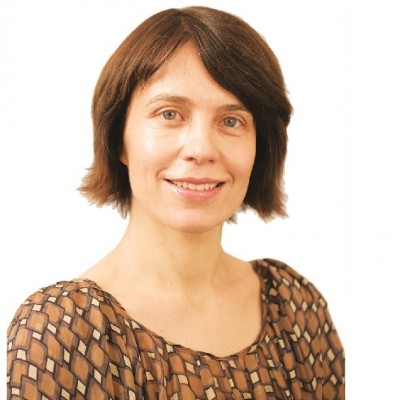
Dr Manuela Toledo, MBBS. FRANZCOG, MMed. CREI qualified (Certification in Reproductive Endocrinology & Infertility) with a holistic approach and a special interest in complex infertility.

Manuela Toledo graduated in medicine from The University of Melbourne and started specialising in obstetrics and gynaecology in 1997.

Manuela trained at both The Mercy Hospital for Women and The Women’s Hospital in Melbourne and became a fellow of the Royal Australian College of Obstetricians and Gynaecologists in 2004. During this time Manuela also completed a Masters of Reproduction and Genetics at the University of Sydney.

Manuela spent three years as the Melbourne IVF Fellow completing specialist training in Reproductive Endocrinology and Infertility, obtaining the CREI specialisation in 2008. She joined Melbourne IVF as a consultant in 2006 and served as a member of the Melbourne IVF Board from 2006-2013. Manuela holds a VMO position at The Women’s Hospital.

Manuela is interested in all aspects of infertility and has a special interest in providing second opinions for complex infertility, fertility preservation and complementary medicines.