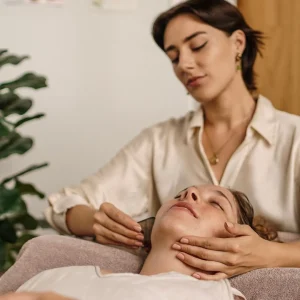
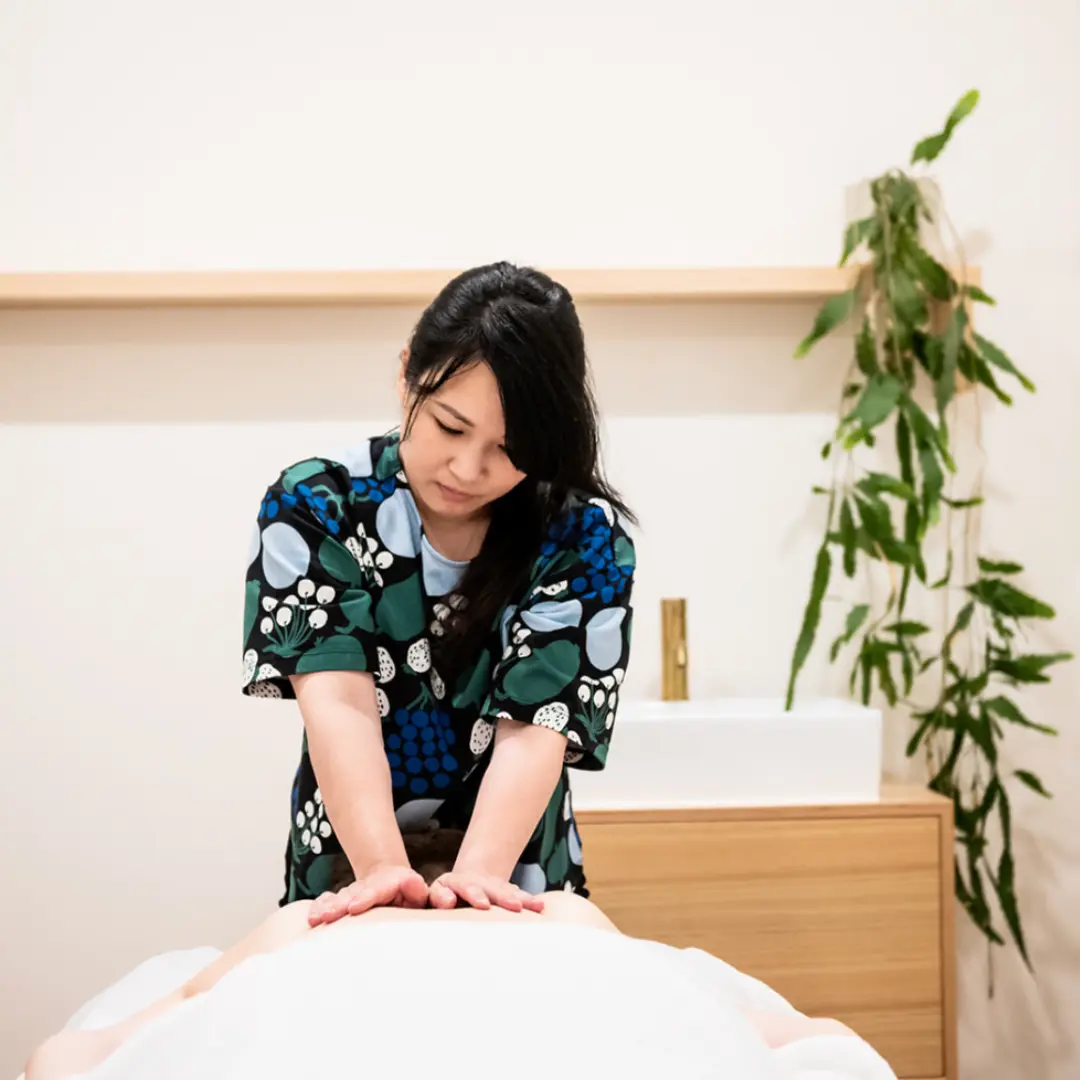
Seeking remedial & pregnancy massage therapist

Are you passionate about supporting people on their fertility, pregnancy, or new parenthood journey? Do you love working with those trying to conceive, undergoing IVF, or navigating pregnancy and postpartum recovery?

We’re looking for a skilled and caring massage therapist to join our team at Fertile Ground Health Group – one of Melbourne’s most highly regarded fertility and perinatal practices in natural health. This is a unique opportunity to grow your massage career in a purpose-driven, collaborative, and supportive environment.

Why Choose Fertile Ground Health Group?

For over 25 years, Fertile Ground has been synonymous with exceptional care in reproductive medicine. Our practitioners are well respected among medical specialists and industry experts. We pride ourselves in providing care defined by integrity, compassion, and expertise.

Collaboration and co-creation are at the heart of how we work. We believe this shared approach creates the richest learning environment – one where practitioners, patients, and the entire support team benefit. It’s a space that fosters continuous growth, connection, and professional evolution.

Massage Therapist Position Eligibility

To be eligible for this position, you already have passion, interest and experience as a Massage Therapist in fertility, pregnancy and/or postpartum massage, and beyond.  Ideally, you love working with people trying to conceive, those who are pregnant and new parents, and you want to simplify your practice to focus on being a fantastic practitioner and dedicating your efforts to growing your patient reach and massage career with the support of Fertile Ground.

Great skills and passion for massage is required, along with your desire to develop referrer relationships (with our help) to achieve collaborative patient results. Additional training in fertility or pregnancy massage will be highly regarded, but not essential. Mentoring is available for our signature treatments for fertility, pregnancy, and postpartum (mother roasting) massage.

What We Offer

You’ll receive dedicated business management and admin support, so you can focus on what you do best – caring for your patients. You’ll be part of a collaborative team of well-known and respected professionals, with opportunities to co-create, grow, and thrive in your career.

At Fertile Ground, we support you from every angle – with the tools, mentoring, and guidance to develop your professional profile and build a fulfilling practice. With new patients ready and waiting, and the strength of our trusted reputation behind you, you’ll have the opportunity to grow a thriving, full practice with ease.

What We’re Looking For

We are looking for an experienced Massage Therapist who:

  • Is ready to hit the ground to establish a fulfilling practice.
  • Values collaboration and has an ability to develop referrer relationships and patient results.
  • Is willing and wants to establish themselves as a leader in the massage profession.
  • Understands the value of community cultivation, through methods such as social media, writing blogs, potential speaking opportunities (to health professionals or patient groups), and/or running small workshops, classes or support groups (in person or online).

Massage Session Times

You will need to commit to a minimum of two massage sessions (days) per week, with a minimum of 4 massages per session. There is immediate room for more sessions than this or growth if desired. You will be working in one of Australia’s most intentionally beautiful and vibrant clinic spaces with an extensive dispensary supplying the entire clinic’s prescription needs at The Melbourne Apothecary.

Room availability:

  • Monday
  • Tuesday
  • Wednesday
  • Friday
  • Saturday

Apply Today

If you’re ready to take the next step in your career, email your cover letter and resume to Sarah Sanelli, Practice Manager, at management@fertileground.com.au

“Touch was never meant to be a luxury, it’s a basic human need.” – Irene Smith

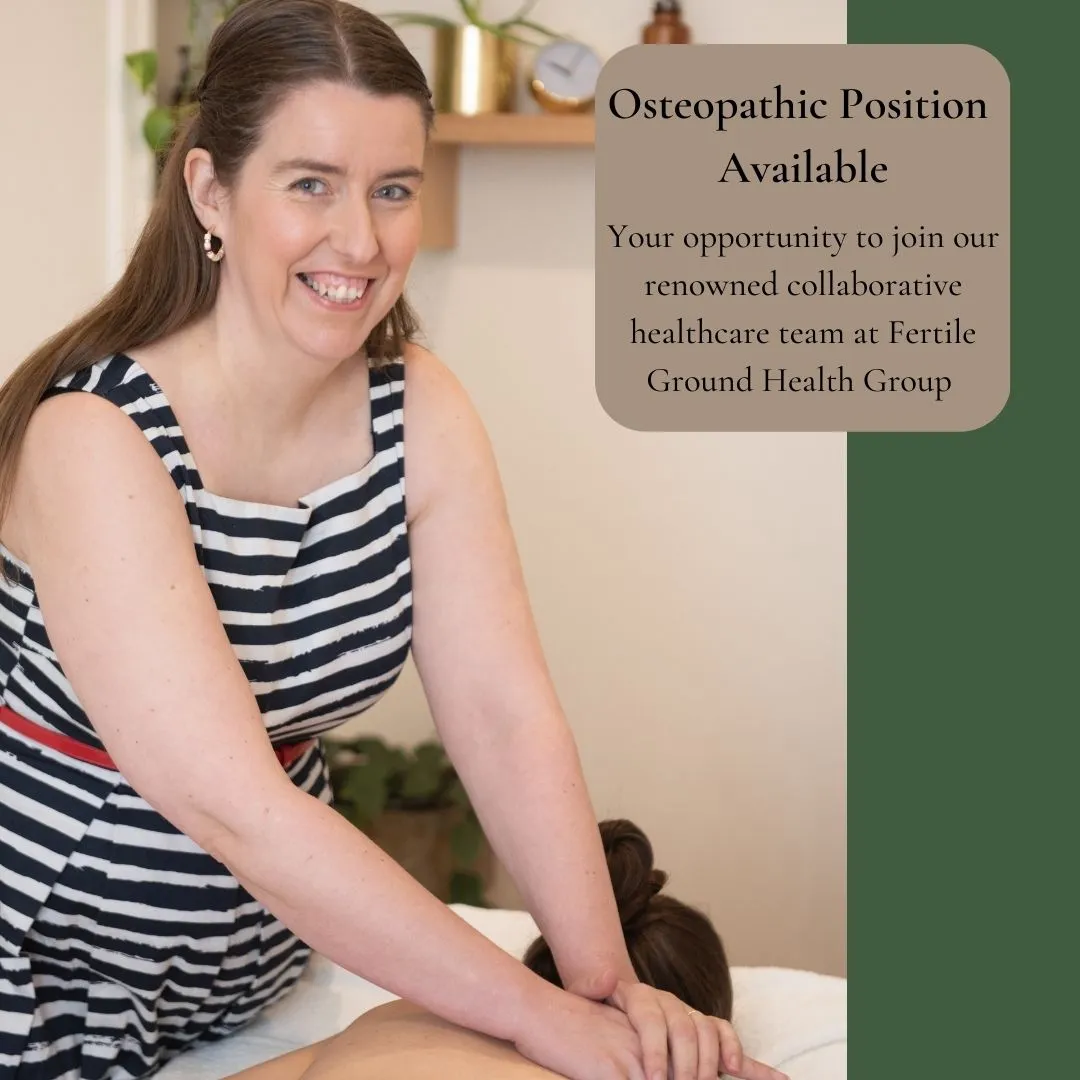
Seeking Skilled Osteopath for Fertility, Pregnancy & Postpartum Care

We are seeking a skilled osteopath to join our highly-regarded Melbourne fertility practice – Fertile Ground Health Group.  This is a rare opportunity for the right candidate for visibility to our large patient base (average 140 new patients per month to our clinic), and opportunities professional growth. Our patients rely on our team’s collaborative approach and expert services for fertility, pregnancy, postpartum and family/general health.

Fertile Ground Health Group practitioners have been leaders in their respective professions for IVF support, fertility, pregnancy-related treatments, postpartum care and general reproductive medicine for over 23 years. Our practitioners are well respected amongst medical specialists and experts within this area of practice. We pride ourselves in providing exceptional standards of patient care and believe that collaboration and co-creation create the best environment with benefits for everyone involved. Our clinic modalities include osteopathy, acupuncture, naturopathy, counselling and massage.

If you are an experienced Osteopath who would like to simplify the work involved in running a business, who feels ready to focus on being a fully supported, fantastic practitioner, and who wants to dedicate efforts to growing your patient reach and enhancing your professional profile, then we welcome you to grow your career with us at Fertile Ground Health Group.

Eligibility Requirements

To be eligible for this position, you must:

  • Already have passion, interest and experience in reproductive health, pre-conception care, infertility, IVF/ART, pregnancy, birth and beyond
  • Have experience working with children and pregnant women
  • Ideally you want to simplify your practice to focus on this niche, dedicating your efforts to growing your patient reach and Osteopathy career with the support of Fertile Ground Health Group
  • A minimum of 3 years experience as a practicing Osteopath
  • Experience successfully developing referrer relationships and achieving patient results
  • Proven patient retention track record to demonstrate capacity to maintain continuity of care
  • Additional training in treating pregnant people and babies will be highly-regarded

Grow your Practice in Fertile Ground

As a practitioner working with the Fertile Ground team, you will not only receive dedicated business management and administrative support, but will also be immersed in a collaborative team of well-known professionals to grow, work and co-create with.

Fertile Ground’s support team also provide opportunities and guidance to help develop and expand your professional profile. Due to the established reputation of Fertile Ground Health Group, you will have a consistent flow of patients to work with on an ongoing basis. As a member of the team, you are expected to contribute professionally to help grow that reputation within the professional and public community – there are a myriad of ways to do this easily, which can be discussed.

Values Alignment

Fertile Ground is a values led practice. We value your collaboration and contribution to our multi-modality team. As the successful candidate you will:

  • Value professional collaboration
  • Demonstrate the ability to develop referrer relationships and patient results
  • Understand the value of contributing education and promotional activities – such as creating resources for patients, social media collaboration, marketing contribution, relationship building and so on

As a member of our team you will receive ongoing opportunities to use the extensive springboard that is Fertile Ground Health Group, providing you with endless ways to accelerate your practice.

Practice session times

You will need to commit to a minimum of two sessions per week for availability and continuity of care for patients. You will be working in one of Australia’s most intentionally beautiful and vibrant clinic spaces.

Apply

To apply for this position, please email a cover letter and resume addressed to Charmaine Dennis and Carly Woods at management@fertileground.com.au

Apply asap as we will be interviewing as soon as the right candidates land in our inbox.

“Choose a job you love and you will never have to work a day in your life.” Confucius

Cosmetic Acupuncture – a natural alternative to Botox

What is Cosmetic Acupuncture?

Cosmetic Acupuncture is an ancient technique dating back thousands of years and used in Traditional Chinese Medicine to enhance beauty and skin radiance naturally. It is the insertion of fine needles into the face to stimulate the skin and muscles, and address concerns such as dryness, fine lines and wrinkles, dark, puffy or sagging eyes, discolouration, acne, scarring and much more!

How does it work?

Cosmetic Acupuncture works mainly by causing a ‘micro-trauma’ in the skin, which stimulates collagen and elastin production and increases blood and lymph flow to the face. This is thought to lead to a range of wonderful benefits that acupuncture is known for, including:

  • Improving the firmness and elasticity of the skin
  • Increasing skin hydration
  • Lifting sagging or drooping areas
  • Reducing the appearance and depth of fine lines and wrinkles
  • Softening scarring and pigmentation
  • Brightening the eye area

What to expect from treatments

Many people experience acupuncture as a dull, pinching sensation upon needle insertion that dissipates quickly, however sensitivity varies from person to person. As our skin regenerates and replaces itself approximately every 28 days, 1-2 months of treatment is usually required to see changes in the skin and achieve desired results. Of course, depending on your chosen skin concern, age and constitution, extra sessions may be needed to reach your goals, and realistic expectations will be discussed in your session.

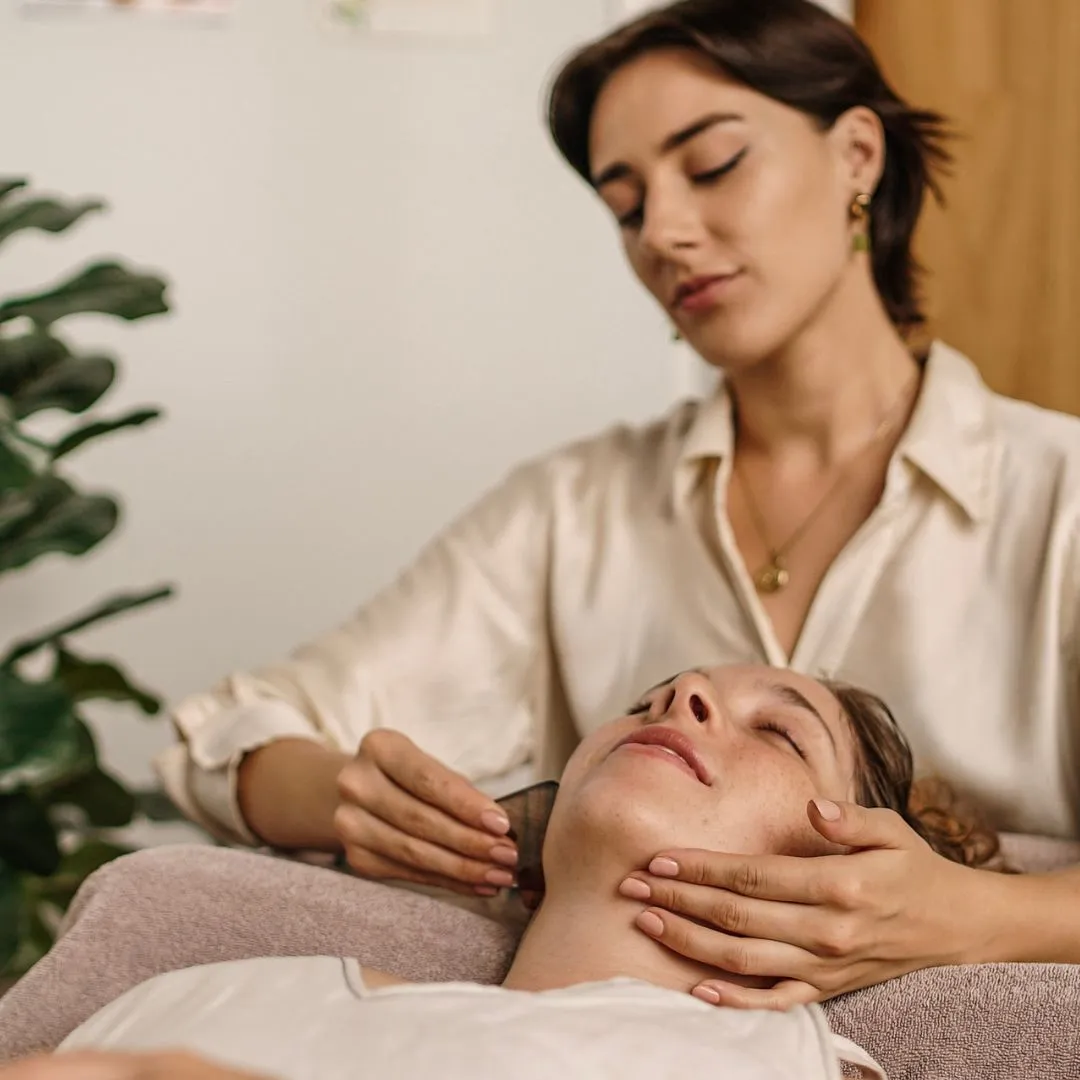
A combination of acupuncture, facial gua sha, facial cupping, jade rolling herbal medicines and lifestyle/dietary advice may be used throughout sessions!

Rather than injecting your skin with chemicals, Cosmetic Acupuncture is a wonderful way to achieve a more youthful and refreshed complexion naturally. As Traditional Chinese Medicine is a holistic practice, treatments will also be aimed at targeting other concerns occurring in one’s body, such as digestive issues, hormonal imbalances and emotional stress, which can all contribute to the health and appearance of our skin. To do this, complementary acupuncture needles will be placed on special ‘grounding’ points on the body. By addressing the skin, mind and the body in all sessions, one is able to achieve a good, holistic harmony, which is essential for having great skin.

Registered Acupuncturist and Traditional Chinese Medicine practitioner, Kiah McGowan, offers their signature Cosmetic Acu-facial treatments at Fertile Ground Health Group and The Melbourne Apothecary.

Book your initial 90 minute session and luxuriate in your refreshed natural glow > Navigate to heading ‘Acupuncture’ > Select ‘Cosmetic Acu-Facial Initial’

Zou Yue Zi – Postpartum from a TCM Perspective

Zuo Yue Zi is a long-documented practice in China supporting women/new mothers after birth. It literally translates to “Doing the Month” – this is more commonly known in Western culture as the Golden Month after birth.

What is Zuo Yue Zi?

In China, this special time is characterised by 40 days of total rest with a heavy focus on Chinese diet therapy, hygiene and behavioural precautions. This allows for the birthing mother to rest and replenish her strength, while laying the foundation of her health as mother and care giver.

Why Zuo Yue Zi is crucial in postpartum recovery?

Sufficient postpartum care can provide the healthy foundation for the mother and the newborn but also pave the way for healthy pregnancies in the future. Zuo Yue Zi is even said to help the transition into menopause later in life.

From a Chinese medicine perspective, Zuo Yue Zi is crucial for the recovery of the birthing mother. Childbirth requires tremendous amount of energy, resulting in an imbalance of yin, yang, qi and blood. Due to the expenditure of energy and yang the mother is vulnerable to invasion of cold and wind which can cause illness or possible chronic health issues.

Rules of Zuo Yue Zi

Zuo Yue Zi is based on the principles of Traditional Chinese Medicine to protect the new mother and prevent illness. During the 40 days it’s crucial for the mother to prioritise rest, do no housework, limit visitors, stay warm, minimise time spent outside and focus on a nourishing diet that replenishes and harmonises. Traditionally, new mothers are forbidden to wash their hair, go outside, watch TV or read and have zero visitors as it could deplete their energy and unnecessary drama could affect the new family.

How you can implement Zuo Yue Zi in your postpartum journey

Zuo Yue Zi is still practiced in China today and traditionally a care giver, aunty or mother would live with the new parents. They would cook, clean and assist in maintaining the household while the new parents spend time to rest and bond with their newborn. Translating these principles into postpartum life is difficult, which is why many women turn to Traditional Chinese Medicine while implementing Chinese diet therapy.

Diet Therapy during Zuo Yue Zi

Food is one of the most important aspects of “doing the month” with ingredients and herbs carefully selected for their warming and blood building properties while strengthening qi and yang. The meals consumed during this time are always abundant in nutrients, slow cooked, energetically warm, and easy to digest. This is to replenish blood, qi and yang lost during childbirth but also and gently correct any disharmonies. Raw and cold food and drink are to avoided during this time as they are hard to digest and deplete the energy of the already vulnerable mother.

Acupuncture, Herbs and Moxibustion

During this time Traditional Chinese Medicine can be extremely beneficial as it can help to balance emotions, improve energy, help with sleep patterns, promote lactation and perineal healing. It is recommended that acupuncture can be used 2 weeks after childbirth – ideally with a home visit session if possible. Once completing the month and feeling ready to leave the home, treatments in the clinic can commence.

If a home visit for acupuncture is not possible but you still want to follow the principles and access the benefits of a nourishing treatment  – here are some ideas. Try to get someone to take you to your session so you don’t have to drive, make sure you are warmly and snuggly dressed, plan to come directly to the clinic and go home again (no ducking into the shops!) and take time to rest (with a warm bath or warm cup of  your Chinese herbs or breastfeeding tea) afterwards.

In clinic, moxibustion (moxa) is used to stimulate the points and meridians to improve circulation, relieve pain, boost energy, dispel cold and warm the body. After childbirth the moxa is used on the abdomen to warm the channel, stop bleeding and help treat postpartum urinary retention. Moxibustion (moxa) is dried mugwort and is commonly referred as Mother Warming during postpartum period. The use of moxa helps energise the mother and facilitate recovery.

Written by Fertile Ground registered acupuncturist, Meghan Smith.

Are you in the postpartum period yourself, or do you know someone who would benefit from this style of care and treatment? Book now

Free 10 minute Introduction Consults

We believe that bodies and minds thrive when given the right ingredients. We are dedicated to boosting our community wellbeing and this is why our brilliant team of practitioners offer free 10-minute introduction consults on rotation, so that you have access to expert care.

These sessions are designed as an introduction to what is possible whilst working with your chosen practitioner.  They are a great way to virtually meet and discuss your needs to see how they can help your individual circumstances, fertility and health care needs. You will , of course, be referred if they think another practitioner will better suit your needs.

With health and fertility, there is endless possibility, multiple angles for fine tuning and a plethora of ways to start to feel better. We want to help you feel your radiant vitality shining through.

Register for your free 10 minute Introduction Consult

Simply head to our bookings page, navigate to Acupuncture, Naturopathy, Nutrition, Counselling and choose ’10 min Free Intro Call’.

Note: If you are interested in fertility, IVF support or trying to conceive, please book with a Fertile Ground naturopath. For general health concerns and questions, please book with a Melbourne Apothecary naturopath or nutritionist.

NATUROPATHY

Charmaine Dennis

Senior Fertility and Oncology Naturopath 


Charmaine Dennis

Charmaine Dennis is a naturopath, fertility and health expert, mentor, writer, mother, and businesswoman with 20+ years of experience. She is the founding director of Fertile Ground Health Group and The Melbourne Apothecary, co-author of Create A Fertile Life and The Breakfast Project and co-creator of the Be Fertile relaxation CD series, among other health inspired projects. Her greatest gift and inspiration is making health, wellbeing, and passionate living accessible, inspiring and achievable for everyone. 

Through her own health crisis at 34 years old (a shocking and life-threatening diagnosis of acute leukaemia in 2010) Charmaine experienced first-hand immersion into the medical system.  This transformative, life-affirming, challenging time has refocused and reinvigorated her drive for good health and living life to its fullest. Undoubtedly this experience has deepened her passion for collaborative health care.

Charmaine’s naturopathic career has followed a special interest in working with people with fertility issues requiring IVF support since 1999.  She has assisted many in realising their dreams to conceive healthy, beautiful babies in collaboration with GPs and fertility specialists, acupuncturists and other health modalities. Since her own cancer experience, she can see the gaping need for more collaboration between natural and medical oncology approaches and enjoys working with people who need support for wellness and advocacy through their own cancer journey at any stage of treatment or recovery.

As well as mentoring and supervising students, naturopaths and other practitioners at Fertile Ground Health Group, Charmaine is running retreats, immersions and workshops for anyone to support their personal or business development.

Book your free 10-minute introduction consult with Naturopath, Charmaine by navigating to Naturopathy – Fertile Ground > 10-minute Free Naturopathic Introduction TELEHEALTH


Gina Fox

Senior Fertility Naturopath


Free 10 minute introduction consults Gina Fox Fertile Ground

Gina Fox is a naturopath with over 20 years’ experience. She trained under Francesca Naish (author of Natural Fertility Management and Better Babies) and has a Masters in Reproductive Medicine. As well as being an experienced clinician she is a speaker, naturopathic lecturer and student clinic supervisor.

Gina is highly skilled in providing naturopathic care for women’s health issues, pre-conception health, infertility, IVF support, pregnancy care and through menopause. She treats a wide range of issues including recurrent miscarriage, thyroid, auto-immune antibodies and she has seen good results working with men to improve sperm quality. She also enjoys the post birth appointments with mother and baby, maximising wellness for the whole family and educating parents on how to manage many common childhood illnesses. Her professional approach involves working in collaboration with doctors and specialists to create an effective co-ordinated treatment.

Gina loves to help couples achieve full-term pregnancies and give birth to beautiful healthy babies. She excels at addressing underlying stressors while couples achieve their optimal fertility. Her own meditation practice led her to become a meditation instructor and co-develop the Be Fertile series of guided relaxation meditations for women around conception, IVF and pregnancy support, which is now available for free to everyone to access and download.

Book your free 10-minute introduction consult with Naturopath, Gina by navigating to Naturopathy – Fertile Ground > 10-minute Free Naturopathic Introduction TELEHEALTH

Georgia Marrion

Senior Fertility Naturopath & Nutritionist

Georgia Marrion Free 10 minute health introduction consults

Georgia is a naturopath of 19 years’ experience with a Degree in Complementary Medicine and a Masters in Nutrition. Along with extensive clinical experience in reproductive health and fertility, Georgia is also an experienced writer and well regarded speaker.

Initially embarking on reproductive health as a clinical speciality following her own personal experience with sub-fertility and pregnancy complications, she has a strong curiosity and passion for supporting people who are experiencing reproductive challenges. Georgia specialises in supporting individuals and couples during their journey through preconception, conception, pregnancy and postpartum life stages.

Areas of focus  include menstrual cycle irregularities, endometriosis, polycystic ovarian syndrome (PCOS) , pre-menstrual syndrome (PMS), mast cell activation syndrome (MCAS) and histamine issues as well as male fertility and sperm health issues.

With 2 children of her own in their primary school years, Georgia can help to expertly guide you through the early years of family health issues, and enjoys treating babies and children with recurrent infections, failure to thrive, digestive issues at all ages and any challenges that you need support with for your baby or child’s best health.

Georgia also enjoys treating women and individuals during the transition to menopause including peri-menopausal imbalances.

Her clinical approach involves supporting and guiding you to optimise your health physically, mentally and emotionally using an approach blending traditional and scientific knowledge. This is based on an integration of her many years of clinical experience with ongoing education to stay up to date with new research and treatment strategies. Along with gaining her Masters Degree, this includes post graduate mentoring and training with Rachel Arthur, Rhiannon Hardingham, Leah Hechtman, Dr Andrew Orr and The Fertility Mentoring Program (The Baby Maker Network) among others.

Georgia believes that a team approach gets the best outcomes for all. She works in close collaboration with her patients’ medical care team to ensure the most effective, appropriate evidence-based treatment plans for each individual.

Book your free 10-minute introduction consult with Naturopath, Georgia by navigating to Naturopathy – Fertile Ground > 10-minute Free Naturopathic Introduction TELEHEALTH

Trying To Conceive

We know that around 80-84% of couples with healthy and fully functioning reproductive systems will be pregnant within 12 months, and 93% within two years. These couples have a 20% chance of conceiving on any one cycle and the chance is not cumulative ‒ it is a 20% chance each time. We also know that a variety of factors can affect your chance of conceiving, including your age, diet, lifestyle, fitness and stress levels. We will get to all of that, but let’s focus on sex first!

A fertility equation

If 100 couples try to get pregnant in January, about 20 will conceive, leaving 80 to try again in February. If another 20 per cent (or 16 couples) conceive, then 64 will be trying again in March. Continuing the one-in-five success rate, by the end of April roughly half will have successfully conceived. At this rate, after seven months 78 couples would have conceived (leaving 22 not yet pregnant).


Trying to conceive (TTC) takes time – it is like predicting the weather really. It can look like rain, feel like rain, even have lightning and thunder and yet still hold off. It will rain eventually in most cases, but we can’t say exactly when. When you start TTC, if you can, try to keep hold of the understanding that you would like to conceive sometime over the course of the year. This will help avoid what many couples experience as the roller-coaster ride of TTC – the highs and lows that come with expectation and disappointment if you don’t have a positive pregnancy test; feelings that are often compounded by PMT!

Having said that though, research shows that if you can interpret your body’s signs of ovulation and time your sex and conception attempts to the fertile window, your chances of conceiving on any one cycle are significantly higher.


When is the best time to have sex?

Every pregnancy truly is a miracle of its own. When it comes to getting pregnant, it seems that many couples aren’t doing it right. A recent Australian study of women trying to conceive found that although more than half (68.2%) thought they were timing it right for conception, only 13% accurately estimated their day of ovulation.

Understanding the most fertile time of the female cycle is critical for conception to occur and it is so important to get good education and advice about this. An inaccurate understanding may contribute to delayed conception and many cases of ‘unexplained’ infertility. Women only have a small window in each reproductive cycle to conceive so it is important to get the timing right. While you can feel like you have been trying for months and months, if you are not focusing your efforts on this optimal window of time, the likelihood of conceiving is slim.


Jane’s Story

Jane had been trying to conceive based on when her app told her she was ‘flowering’. Sure enough, as her cycle was irregular (31-45 days), it was way off, saying that she was ovulating a lot earlier than she was and hence missing the fertile window for healthy conception. This couple tried the next month at the right time, and low and behold it worked! Jane also made diet changes and had started herbal medicine, but the timing was an important factor. 


The Fertile Window

We know that eggs only live for 12-24 hours while sperm may be viable for up to five days (although most have very little vitality left after three). For optimal chances and the healthiest conception, ideally sperm will be ready and waiting in the fallopian tubes for when the egg is released by the ovary (ovulation). The best chances of conceiving occur with intercourse within the two days before ovulation and the day of ovulation. These three days are called your ‘Fertile Window’.

Technically, you do have a small chance of conception from five days prior to ovulation but you have the highest probability during this three-day window. This is also the best time for insemination for same sex couples or single women who are planning to time insemination at home. In most cases you don’t need to rely on technology or your doctor to tell you when this is occurring. Happily, there are signs to indicate the fertile window and that the egg is about to be released.

When is my fertile window?

To improve your chances of conception, have sex during the two days prior to ovulation and the day of ovulation. e.g if you ovulate on Day 14 of your cycle, your most fertile days (and also the best to have sex) are likely to be days 12, 13 and 14.


Having said that, ovulation can be affected by many factors – stress, weight (over and under), excessive exercise, excitement, travel, thyroid problems, polycystic ovarian syndrome and anaemia (as well as all the various types of infertility). Read on for more information on how you can understand how to determine your fertile window, but it is important to seek guidance with a qualified and experienced fertility professional if you are confused. 

Where time permits, it is useful to check and record the signs and symptoms of your reproductive cycle for a few cycles before you try to conceive

Knowing your signs of ovulation and timing your sex with understanding of your cycle will give you an increased sense of confidence in your conscious conception. Marking secondary symptoms like headaches or fluid retention will give your fertility practitioner team very useful information about your cycle and hormones to assist with providing the best treatment for your individual needs. 

Make sure you scan and email or bring your charts to every fertility related appointment where possible. Your practitioner will help you to understand and interpret your chart with ease. It may seem confusing at first, but within a few cycles it will become clear – a free and easy method to understand your cycle for your reproductive life. 


For more information or to get help on your fertility or pregnancy journey, book in with a Fertile Ground Naturopath


References:

Crosignani P, Rubin B, The ESHRE Capri Workshop Group. Optimal use of infertility diagnostic tests and treatments. Hum Reprod. 2000;15(3):723-732. doi:10.1093/humrep/15.3.723.

Fritz MA, Speroff L. Clinical Gynecologic Endocrinology and Infertility. 8th edn. Philadelphia: Wolters Kluwer Health/Lippincott Williams & Wilkins; 2011.

Gnoth C, Godehardt D, Godehardt E, Frank-Herrmann P, Freundl G. Time to pregnancy: Results of the German prospective study and impact on the management of infertility. Hum Reprod. 2003;18(9):1959-1966. doi:10.1093/humrep/deg366.

Hampton K, Mazza D. Fertility-awareness knowledge, attitudes and practices of women attending general practice. Aust Fam Physician. 2015;44(11):840-845.

Jansen RPS. Elusive fertility: fecundability and assisted conception in perspective. Fertil Steril. 1995;64(2):252-254. doi:10.1016/S0015- 0282(16)57718-8.

Manders M, McLindon L, Schulze B, Beckmann MM, Kremer JAM, Farquhar C. Timed intercourse for couples trying to conceive. Cochrane database Syst Rev. 2015;3(3):CD011345. doi:10.1002/14651858.CD011345. pub2.

Sharma R, Biedenharn KR, Fedor JM, Agarwal A. Lifestyle factors and reproductive health: taking control of your fertility. Reprod Biol Endocrinol. 2013;11(1):66. doi:10.1186/1477-7827-11-66.

Te Velde ER, Eijkemans R, Habbema H. Variation in couple fecundity and time to pregnancy, an essential concept in human reproduction. Lancet. 2000;355(June):1928-1929. doi:10.1016/S0140-6736(00)03202-5.

Contemporary Birth Culture – a free webinar with Rhea Dempsey

Contemporary Birth Culture

We’re thrilled to announce that Rhea Dempsey (renowned counsellor, best selling author and childbirth educator) is offering a wonderful free event to all practitioners about understanding contemporary birth culture and its impact on birth experience.

Register your spot for this free 45 minute webinar with Rhea Dempsey, going live on Wednesday July 27, 2022 at 4pm AEST.

“I hear far too often of the dismay you feel as a practitioner when the pregnant woman, whose body and being you have been treating and preparing for birth returns with a distressing birth story. A birth story filled with interventions and just-in-time emergencies, leading to distress and trauma – and you wonder what on earth happened?

In this free 45-minute webinar I will introduce you to the key structural factors in contemporary birth culture that hijack so many women’s birth dreams and leave you puzzled.”

Rhea Dempsey


Contemporary Birth Culture

This webinar is open to all health professionals

In particular, this webinar is for those counsellors, psychologists, naturopaths, acupuncturists, doctors, birth workers and all supporting practitioners who are integral to the healthcare team of patients moving through pregnancy, birth and the postpartum period.

You’re most welcome to register for this event. Please share it with any colleagues you believe would also benefit.

Rhea’s classes and workshops have long been held in high regard by practitioners and patients alike. She has been doing incredible work in the birth space for decades and we’ve no doubt you’re already a raving fan (as we are).

We are honoured to be launching this digital offering with Rhea and creating a reservoir of her wisdom for people to access. It will feature in the Fertile Ground Legacy Series – an initiative we are creating to translate the decades of collective wisdom that Fertile Ground practitioners have amassed, because we want to ensure that this important knowledge is passed on to you and the next generation of practitioners to come.

Looking forward to seeing you there.
Warmly,

Charmaine Dennis & Carly Woods
Directors | Naturopaths
Fertile Ground Health Group

www.fertileground.com.au
Facebook & Instagram
a: 33 Smith Street, Fitzroy
(03) 9419 9988

PS – Register now for the Free Webinar with Rhea Dempsey – going live Wednesday, July 27 at 4pm.

The Two Week Wait

It’s important to explore your options for mind and body support during the two week wait, as this is the time between ovulation or transfer of an embryo during IVF,  to when you find out the outcome of your pregnancy test. It can be a time of great anguish, as you wait (for about 2 weeks) to find out if you are pregnant. 

Many women that have been on a fertility journey for a while often say they are living their life in 2 week increments. The 2 weeks leading up to their ovulation are filled with planning, and lots of sex in the days before ovulation, which then moves into stress and anxiety post ovulation, followed by a depressed few days when their period comes, to be repeated over and over. 

Seek Support

To help support you in this time, here are a few tips to help optimise your body in lowering stress, improving your mood and as well as optimising your body to hopefully lead to a positive pregnancy test. 

  • Reward yourself with a massage, a shopping trip or a delicious meal out with your partner (no wine though please). There is some evidence that supporting dopamine can help support implantation. Dopamine is produced when we feel a ‘reward’, so no better excuse to treat yourself than this. It doesn’t need to cost money either, it could be running a bath for yourself with some candles, chatting with an old friend on the phone or anything else that feels good. As well as supporting dopamine, it can also help as a point of distraction during the two week wait.
Sex for everyone
  • Commonly, when couples have been trying to conceive for a long time, sex can become a little mechanical and left for just the fertile window.  However, studies show that a woman being exposed to a male partner’s semen post ovulation or transfer can actually help implantation. When an embryo implants into a woman’s uterus, her body has to perform a miraculous feat of down-regulating her immune system to allow the foreign cells from the embryo to join into her body and allow her blood supply to continue to nourish and grow the embryo. In no other time does this happen, think of how many immunosuppressive drugs a person must take in an organ transplant. It is believed that a woman continuing to be exposed to a male partner’s cells through contact with semen, this supports that down-regulation of her immune system to support the embryo’s implantation. Sex can also be a wonderful way to boost dopamine, see above, as well as to strengthen the connection between a couple.
  • When going through the fertility journey, allowing sex to be for pleasure and not just baby making, can be a wonderful way to maintain your connection in any context you choose – be it to yourself, to your partner or otherwise. Sex can be supportive whether you’re conceiving naturally, through IVF or in a heterosexual or same-sex couple. For single women, self-pleasure can be just as beneficial. 
When is sex not recommended?

The only time I may consider sex may possibly not be safe during the two week wait, is if you have a significant vaginal infection such as Bacterial Vaginosis. Hopefully this has been looked into and treated prior to conception but if you are unsure, speak to your naturopath practitioner. 

Nutritional & Medicinal Support
  • Eat nitric oxide rich foods such as berries, beetroot, dark chocolate, pomegranate and leafy greens. Nitric oxide is a chemical in the body that helps to open blood vessels and promote blood flow. Increasing blood flow is important for implantation to help nourish the uterine wall and embryo. Some examples of how to include these foods could be a berry choc smoothie with cocoa and organic raspberries, or a roasted cauliflower and beetroot salad with a yogurt dressing and pomegranate sprinkled on top. The other benefit of these foods is they are often feel-good foods, boosting your mood. Another fantastic way to support blood flow can be getting acupuncture, and many studies support acupuncture for not only improving implantation but also relieving stress and anxiety.  
  • Take your progesterone or progesterone supportive herbal medicines. Progesterone is produced in a natural cycle post-ovulation from the corpus luteum, the temporary gland that is produced once an egg leaves the ovarian follicle. Progesterone supports implantation by down-regulating the immune system, lowering inflammation and maintaining the uterine wall for implantation. If during your preconception work up, your naturopath has found you have low progesterone, they may have implemented strategies through nutritional supplementation or herbal medicine to increase progesterone levels. If this is the case, please remember to take your medicines in this time as it is important to continue to work on your progesterone. During an IVF cycle, progesterone pessaries are very commonly prescribed, and please continue taking these as prescribed by your fertility team. There are other benefits too – low progesterone can increase anxiety and insomnia, so by supporting healthy levels of this hormone you can also support a happy mood. 
  • Take your probiotics: some strains of probiotics can support progesterone production which helps with implantation as well as supporting good bacteria that support implantation as well. Bifidobacterium strains, in particular, have some research they can increase progesterone, while the lactobacillus species are the beneficial species in the vaginal microbiome. As mentioned above, vaginal infections can possibly affect the implantation process, by increasing inflammation, and triggering the immune system, so support a healthy vaginal flora while helping to boost your progesterone levels. Speak to your naturopath about which probiotics are right for you, as different species have different roles in the body. 

These strategies can be really helpful in supporting your body to increase the chances of falling pregnant and lowering your stress and anxiety during the two week wait, but the real work comes in preparing your body BEFORE conception. Working with your naturopath for at least 4 months prior to conceiving, can increase your chances of pregnancy through natural conception or IVF by improving egg and sperm quality, supporting healthy nutrient levels, looking at microbiome issues and addressing hormone imbalances (just to name a few). There is a myriad of things we look at improving for people who are struggling to conceive. 

If you would like to find out more how I can help you, please book a free 10 minute consult and we can have a chat about your current fertility struggles and make a plan to move forward.

Yours in wellness

Tess Doig

Tess Doig is a highly skilled degree qualified naturopath with over 9 years of practice specialising in the areas of fertility, pregnancy, women’s health and mental health. She is skilled in complex infertility cases, helping support many women and couples through unexplained infertility, recurrent miscarriage, IVF, male factor infertility and more. 

Along with supporting singles and couples with fertility, she also has a passion for all areas of women’s health including hormone imbalance, gynaecological disorders, vaginal infections, autoimmune conditions and mental health.

Stories of Survival in NSW floods

Our hearts reach out to all the people who have been caught in these catastrophic floods.

Within this huge group of impacted people there is a minority community who have been sharing their stories of survival with us directly – solo parent families who have lost their homes. These people are sharing their stories with us because we have launched a fundraising campaign to support this vulnerable group to rebuild their lives. Supporting community health, in particular family health, has been a mission of Fertile Ground Health Group for the last 21 years and in this time of need we feel grateful to have the means to generate momentum and support for solo parent families in NSW who have lost their homes.

These stories of survival in the devastating floods are powerful demonstrations of the resilience and willingness of the human spirit when met with such catastrophic and urgent life and death moments. These stories are both heartbreaking and inspirational.  So far it is solo mummas and their children who have registered for support with us from this campaign, and the courage these women show is incredible.

Read the Stories of Survival (continuously updated as more come through)

When we heard the news of the flood I immediately contacted my landlord who said in the 2017 flood my apartment was absolutely fine so I naïvely thought we would be okay to stay here and just use our gas camping stove for meals. I ran out and helped move things in the library in the Toy Library, and got some shopping and then settled in for a few days stuck in the house. We don’t have many support systems in the area where we can just rock up for a few days and expect them to accommodate us, even if there is the threat of disaster. By 11pm we were getting warnings that the flood was going to be bigger than predicted, and we’d need to evacuate. 

I had already moved my car and I did not think it was safe to walk 3 km through low-lying streets with my three-year-old on my back so we decided to stay put. I flagged down a passing SES car but they said they were not taking pedestrians in their cars simply warning them to evacuate. We had no choice but to stay put and hope for the best. I called my Dad letting him know what was happening in case reception went and wrote a list of important phone contacts and sealed it in a ziplock and shoved it in my dry bag. 

I rushed around moving things as high as possible, packing go bags and tying my kayak to the clothesline. A move I thought was futile at the time. At 2 o’clock I heard a large bang downstairs and alarms started blaring. The levy had broken and water was rushing so fast down our downtown apartment that trees were being snapped. A stray gas bottle smashed into our door. Cue panic – dressing myself and my 3yo and a plea to the universe that we would survive again. In January of 2021 I woke to almost our entire apartment on fire, it had just reached the hall outside our bedroom. 

I scooped my 3yo out of bed and bolted, seconds after placing my feet in the garden from the bottom step both gas bottles exploded. Now we were living a similar horror again! Hours passed, frantic calls to both police and SES begging them to just take my daughter. The last SES call at 5am was met with a blunt ‘we aren’t coming into the CBD, good luck’ and an abrupt beep as they hung up. 

I called Mum and Dad and choked out a goodbye. Called a friend and told her I didn’t blame her for the advice to stay in the apartment. By this point the water was up to my knees. My 3yo was being exceptionally calm and brave, I am so proud of her! I lifted her from the floating couch into the kayak and jumped in after her, balancing the 4 kittens we had recently rescued precariously at the front. We had about another 1m left on the tether before the top of the kayak would have been pulled under water. I had a knife ready to slash it. We were wearing helmets and she had a floaty, I had a head torch. 

Even though the water was calm and slowly flowing away from the river, the rush of water I had seen earlier was so ferocious I was convinced we were dead if we entered it, kayak or not. I contemplated drowning my 3yo myself so I wouldn’t have to watch her suffer or be sucked away, I could at least tie her to me. 

Tried to climb the roof, too high. More frantic calls to family. Suddenly a voice screaming my name in the distance. I sloshed over to the side of the balcony, it was my DAD! He had borrowed a boat, been stopped on roads four times by the SES before he found a way through. We were saved! Everyone loaded in, three wet bags with some clothes and my phone and wallet. We passed my neighbour who didn’t want to be rescued, a family of five up to their necks in the water trapped behind bars. I begged dad to save them but we couldn’t get the window open. A man lying still on a roof, someone floating in their top story. Countless others screaming from rooftops to be rescued. 

At the end of the river near the large shopping centre there were police officers helping to get people out of boats. We jumped out and Dad grabbed something from his car to try and bust open the window. I waited for him to return, the tears were flowing. Four little faces and a mother came back with him, they had their heads turned to the side standing on a table by the time he pried the security screen off. We rushed them to the evac centre and everyone got fresh warm clothes. I hate to think of the others who died with the same fear we faced that night and I’m so grateful we have escaped near death, twice!

– Los (Lauren) De Groot, Lismore NSW

DONATE TO HELP NSW SOLO PARENT FAMILIES WHO HAVE LOST THEIR HOMES IN FLOODS

The last thing I did before going to bed was to hang my children’s floaties on the bedroom door, just in case. A strange thing to do perhaps, but there’s only me. There’s not another set of ready hands, or another mind in the moment, to help problem solve. I’ve got to make the decisions that will give my kids the best chance and protect them as much as I can. The flood levels were not predicted to reach our house, yet I had spent the last couple of days lifting, packing and preparing our house and belongings. The doors were sandbagged. I’d packed a bag in the car and moved it up the hill. I’d turned off all power points, even the fridge. I’d set my alarm to wake hours before the ‘peak’ of the flood so I could assess where we were at. It still wasn’t enough. I don’t think anyone could have prepared enough for this. My 6 yr old son and I ‘miraculously’ awoke at 3.30am, just as the first trickle of water snaked in under the door. A man arrived at our door yelling for us to get out now. We tried to move more of our stuff upstairs to our housemate’s room (another single mum). My little boy waded back and forth carrying his belongings and treasures upstairs. We had 30 minutes before the water had risen to a level where the water reached the bottom of the mattress on which my 2 yr old was still sleeping. I snatched her up and ran out the door. We got to a friend’s house, safe. The flood breached the second level of our house. Incomprehensible. Previously the highest level breached in our house to our knowledge was 15cm. Our ceiling collapsed, our home is unlivable, but what’s most heartbreaking is hearing my little boy try to problem solve where we will now live.

– Nina Woods, Bexhill NSW

Stories of Survival - Nina Woods 2
Nina returning to salvage items after the flood waters started to recede


Stories of Survival, Nina Woods
Nina and son, Lachie, sorting through the few house items they managed to salvage and bring back to where they’re sheltering


DONATE TO HELP NSW SOLO PARENT FAMILIES WHO HAVE LOST THEIR HOMES IN FLOODS

My name is Kate Coxall, I was a volunteer firefighter with the RFS for over 4 years, and also a trained Case Manager/Support Facilitator. The skills and training I had from this saved our lives, for this I am forever grateful. We lived in Bungawalbin, on a 110 acre property we had rented for 4.5 months after being evicted due to a sale of our Upper Wilson’s Creek Property. We left on Sunday night, because the water had already come under the house and was rising at a rate that was mind blowing, metres per hour. I let our Budgies out, knowing they would be able to fly to higher points, and raised all belongings and furniture to higher points over hours. I mustered the Landlords cattle the day before in thigh deep + water through several complex scenarios including deep water, to the highest paddock on the property near the road. I was so glad I had done that, they would definitely have drowned otherwise. I took my 8YO daughter, our beloved 8YO rescue dog (member of our family) and drove to the neighbours, after leaving extra feed out and what I assumed at the time, was a barrier to water rising, a plastic storage tub, at the chook’s house door.

I came back after another minimal sleep night of the heaviest rain I have ever heard, at 10:30am. The house had already been inundated, to floor height, I was absolutely shocked. I saw the chicken yard was 1m under water and left the car and my wet weather gear on the fence at a high dry point, and waded through 5ft deep water, over a fence to rescue the chickens, all 9 plus our rooster who snuggled into me to thank me, they had 20cm left till they would have drowned. My daughter has not only named them, they come to her and jump into her arms when called.. I managed to put 3 in the plastic tub to take back to her, but then bogged my car trying to turn around. The neighbour came to help out, and bogged her car, we had access to her partner’s family Ute, which we drove back to the cars, i tried to two her out, unsuccessfully due to the conditions and angles. We saw 5 people carrying a motor, then a boat, attempting to get from Bungawalbin to Coraki, some shoeless, one, Craig, with a huge gash on his head. We begged them not to keep going, just to come and shelter with us, but they refused, and attempted to go on. We later got an urgent message on social media that they were in need of desperate evacuation and had chained themselves in the Tinny to a tree. I cried for them many times, desperately asking other emergency service and medical trained friends to call 000 as I couldn’t call out, but could message. They survived thankfully, we later found out. 

Then the water rose and rose, and we heard the neighbours on the other, much lower side hadn’t been rescued yet and had lost all communication. I again asked friends to please, please call in the rescue knowing Lehann Suffolk and partner were mature aged, and much lower down than where we were. That night, after hearing choppers throughout the day go past, having logged the rescue for them, and us, I couldn’t sleep. I left a flashing torch on the fence post, illuminating the house, deck lights on, hoping the SES would see us. We learned that SES and ADF were grounded at midnight by the time the messages came through, it was terrifying knowing how incredibly fast the water was rising and how inundated we were. At 4am after many days with minimal sleep, I thought I heard 3 voices and screaming.. I felt beyond desperate, worried the Suffolks had not survived. I kept messaging people and services asking for help. That next day I was worried the other lady with me had gone into sepsis, and I felt I had started to go into shock, the water was still rising, and I was exhausted. We spent many hours outside trying to wave at Choppers. The first went straight over us, but the cloud cover was so thick that they missed us altogether. That moment was very disheartening, I thought we may not get rescued. 

My daughter was so brave throughout, but I saw her struggling with the reality that we may/may not get rescued, the fact she learned our house was fully under and the gravity of the idea that we may need to not just leave Budgies AND chooks behind, but her beloved support dog. I was so glad that I could identify what was happening for her and hold her through it. When the chopper came, after I had suggested that we find fluoros and other high visibility materials, which we laid down in the house yard and my neighbour laid on the road, after we waved and yelled and thought they may not find us, we were so, so relieved. I hugged Rob from the ADF thanking him, and then he told us that we couldn’t bring our dog. It was heartbreaking for us both. I took her back to the house where I had laid all the dog food we had and a large bowl of fresh water and told her to “stay home”. She got out and tried to follow us. My heart broke as I had to tell her to “go home”. I was worried she would get hurt or traumatised further from the chopper. I will never forget her face, I just want her back with us. We then were airlifted to Lismore SCU Evacuation Centre, given fresh food, a bed and offer of clothes, medical support and toiletries and charging stations. The gravity of what we had been through was starting to hit me, but we are so grateful to be safe. My employers, from The Lismore App, now family, offered us a place in their home, which is where we have been since, in Gooonellabah. What blew me away most is that a lady came up to me and offered that we could go and stay in her Mum’s granny flat, her name is Mim, and she could lend us a car.. everyone was so kind, I could never thank them enough. The best moment for me was when I was able to ask the man who had already been rescued in the chopper if he had come from the Suffolks property, the neighbours I thought I heard screaming and was desperately worried had drowned.. he confirmed they were all alive and not too unwell. That moment was just the most heartening of all. Thank you to all the rescue personnel, friends and community for your support to get us out, and to check in. It’s made all the difference.

– Kate Coxall, Richmond Valley NSW


DONATE TO HELP NSW SOLO PARENT FAMILIES WHO HAVE LOST THEIR HOMES IN FLOODS

I’m overwhelmed by what a long haul this is going to be. It’s taken me years after my husband left us with nothing to rebuild our lives & now my daughter keeps crying listing all the things she became attached to. It’s hard for children to comprehend the notion of our lives being at risk vs material or sentimental things. Myself and another solo mum fled at 4am with our kids and nothing but the clothes on my back. Our double story house is under and have lost everything. We also don’t know where we are going to live. The housing situation in the northern rivers is so dire – worst for solo parents. I felt vulnerable before : now I’m not sure there is any hope of us being re-housed or recouping what we lost .. it all feels too hard right now : /

– Leah Bee, Bexhill NSW


DONATE TO HELP NSW SOLO PARENT FAMILIES WHO HAVE LOST THEIR HOMES IN FLOODS

My name is Elina Salokangas. I’m a single mum of 9yo girl and 6yo boy. We live in The Channon, NSW. This is our story. 

Sunday night the power went out at 11pm. So I had flashlights ready. There was a teeny bit of water coming into the living room under the skirting board, which happens sometimes when it rains. So I was up mopping. Then when I went to toilet around 1pm, flushed it, the water came up halfway. I thought, “That’s strange…” I went out to check the creek level on the side terrace (there’s a normally dry creek next to the house, about 5m below the level of the house) and I saw the water level was up to the terrace!! That has never happened before!

I went out to the front terrace to check if I could see any water, and water was all I could see! I quickly rescued the bunnies – the bottom floor of their cage was already under. Then I woke up the housemate in the studio. Moved my campervan on higher grounds. Then went back mopping… until the water started to come in from everywhere!! 

My first thought was to lift everything from bottom shelves and cupboards up higher, onto top of the shelves, thinking I was saving all the most important things… little did I know that all the shelves and furniture would fall over anyway. My son was sleeping on the couch. I picked him up when the water level was almost touching him. Put him down on my bed, next to his sister. Quickly went to get some jumpers for them… wetsuits… then woke the kids up, carried them to the kitchen table and put the wetsuits on. My housemate had two life vests as well, which I put on for them.. then the table started to wobble and float! Carried the kids to the kitchen counter, while putting up the ladder, and then carried them to the ladder and up to the bus roof. So grateful my bus was parked under the terrace roof 2 weeks prior! And you could quite easily climb to the roof of the house from the top of the bus, if necessary.

Last thing I got from the garage was a tarp, kids floaties, saw, rope, secateurs… water up to my belly button by then. I sawed the legs off from the little bunny cage and so we could fit them on the bus roof as well.

By then it was maybe 3am? It all happened so fast, from no water to waist height in 30mins, I think! I was too wet to go to the roof, smelling like sewerage, so I ended up standing on top of the ladder, leaning on the bus, the rest of the night. Also to make sure the ladder wouldn’t float away. 

By the sunrise the flood levels dropped. I got down, started to clean up the sludge from the front terrace and gather all the bits and pieces, while the kids were still sleeping up on the bus roof. It was still raining non stop, and less than an hour later the water started to rise up again!! I climbed back to the roof. About 1m water on the terrace and indoors… during the night it peaked at 1.8m indoors, 2-3m around the house, up to 4m on the driveway… my hitop campervan was almost totally under.

When my son woke up, he saw somebody swimming in the flood waters!! We could not believe our eyes! It was our neighbour, the landlady’s nephew, coming to check on us if we were Ok. First time ever I identified somebody as a True Blue Ozzie Hero! About half an hour later our other neighbours came in by canoes to rescue us! By then I felt totally dysfunctional, just so relieved and happy to be rescued. We survived. Can’t stop thinking about how different the outcome it would have been if I would have gone to bed early, before 11pm, that night…

– Elina Salokangas, The Channon NSW

Please share these stories of survival with your community and share the fundraiser. Every little bit helps. Thank you.

With gratitude, kindness and in support of solo parent families who have lost their homes in the NSW floods,

Carly Woods & Charmaine Dennis
Directors
Fertile Ground Health Group

Change Seems To Have Been Knocking

Hello 🙂

Change seems to have been knocking pretty loudly on the doors to our souls for the last few years. And as human beings we generally love familiarity and resist change. So how do we find a smooth path forwards amidst the intensity, knowing that change is one of the certainties of life?

Change is inevitable.

Growth is optional.

-John C. Maxwell.

I find inspiration in reflecting on the element of choice amidst change. Perhaps many of us feel like life is happening TO us. I prefer to think that life is happening FOR me and that I have the incredible privilege of choice in how I respond to anything that the winds of change serve up on my colourful life platter. 

Change brings with it a huge opportunity for choice and personal growth. Now, growth is a lovely sounding word HOWEVER in actuality the experience of growth is often downright painful. 

Growth is reaching into realms we don’t yet know (no familiarity). Growth is being a learner at something and not getting it right straight away. Growth is putting something out there, failing, learning from that failure and recalibrating to soar to new heights. Growth is extrication of patterns of thought, emotion and behaviour that have become embedded in the subconscious parts of our brains, and the stretching effort involved to movement beyond that to something that better serves us in our lives.

Growth is uncomfortable

Thankfully, discomfort is the currency of our dreams, so what an amazing gift!

Imagine moving from a state of resistance into a state of delight when met with change and growth. Imagine being so willing to feel the discomfort of growth that you’re constantly reaping the rewards on the other side of it. Imagine using constant external change in your environment to inspire you to push through the discomfort of personal growth in a way that catapults you into an incredible spectrum of human experience that you’ve not yet touched in your life…

The opportunities change brings are endless

And I wish you many beautiful moments of growth amidst it!

If you want support amidst big changes and the discomfort of growth in your life; if you want to steady your capacity as you step into the discomfort and choose to grow in ways that serve you; if you want a moment of spaciousness to breathe and let everything fall away to recalibrate yourself for the next step on your journey – know that we are here for you.

Find the practitioners you need here → www.fertileground.com.au/practitioners 

Your MA 💕

PS – we’re beginning to experience limited availability for many consult types, so we recommend booking in advance for your appointments.