On The Way Toward Parenthood

Understanding the Foundations of Parenthood

Our parenting experience starts long before the birth of our first baby. How we were parented and what happens to us along the way informs the parents we become. Any form of trauma is worth revisiting when contemplating parenthood. Traumatic events in childhood and adulthood can complicate how we feel about many things associated with becoming a parent and many are buried deep, often to enable us to continue to function.

Embracing Fluid Parenting Styles

Yet our parenting style it is not set in stone. The parents we become remain fluid if combined with insight and intention to be the parent you want to be. Each decision and choice we make can be reversed and redirected with reflection and courage.

The Challenge of Being the Parent You Needed

It is not easy to be the parent you needed but did not have. It will stretch you into your own grief, your sadness and sense of loss whilst asking you to be the adult in the room, stronger, kinder, and wise. I can’t think of another life experience that requires this fundamental shift in selfhood.

Recognising Unconscious Patterns in Parenting

I say courage because it truly does take a tangible, felt experience of gut-wrenching clarity that you just did or said something to your child that you thought you would never repeat or hear come out of your mouth. We often don’t want to repeat the errors of our own parents, but it does not have to mean a complete swing away from the model they presented us with. Rather than a knee jerk alternative we would do well to sit with that duality and take control in thoughtful decision making by making different choices that may have been harmful or hurtful in the past.

Impact of Family Narratives on Parenthood

How we were raised may also impact our very desire to be a parent. Family stories can shroud any feeling of delight or reward that might be possible if you were treated poorly, devalued, disrespected, or disregarded. Similarly, the choice to not parent can become fraught if the family narrative only holds parenthood as the established value of worth. Reproductive adversity on the way to parenthood can truly mark us. Much of what can happen can be traumatic. How do you then flip that and suddenly be happy about pending parenthood when the cost has been so great.

Coping with Reproductive Adversity

There is no shortage of material when talking about this legacy in counselling. Many do not realise the mark life has left on them when thinking about raising children. Meeting your newborn baby carries you into your own newborn state of parenthood. Just like your newborn you will need to feel your way with your senses and what your sensible, adult brain thinks should happen often does not transpire. What you want your baby to do does not match with how they are and the adjustments you do or do not make are likely to either make or break you.

Counselling: Navigating Parenthood’s Challenges

How you learn to care for your children will be informed by how you were cared for by your parents. Even the things you cannot directly remember are often held within us to be revealed in time. Big and strong emotions often accompany parenthood in ways that confound us. It is so common to have a client say to me I am so different to how I thought I would be, and I don’t understand where this is coming from. Then the work begins. In counselling, we thread our way through the many experiences life has provided in order to make sense of our responses and take charge of what we want to do differently.

Empowering Positive Changes in Parenthood

It can feel very scary and make us very vulnerable, but it is possible to make great changes. We don’t have to continue to harm and hurt our children just because that is what was done to us. It is possible to hold a profound intention to do it differently just with an intention to do so. Allow the intention to take you into action and demonstrate to yourself and your family what is in your heart. Learning to understand the legacy of your life experiences and how it might impact your behaviour is to be applauded. What better investment is there in caring for those that are considering, trying to, or encountering themselves as parents.

Written by Suzanne Hurley, Perinatal & Fertility Counsellor at Fertile Ground Health Group
Make a booking

Free 10 minute Introduction Consults

We believe that bodies and minds thrive when given the right ingredients. We are dedicated to boosting our community wellbeing and this is why our brilliant team of practitioners offer free 10-minute introduction consults on rotation, so that you have access to expert care.

These sessions are designed as an introduction to what is possible whilst working with your chosen practitioner.  They are a great way to virtually meet and discuss your needs to see how they can help your individual circumstances, fertility and health care needs. You will , of course, be referred if they think another practitioner will better suit your needs.

With health and fertility, there is endless possibility, multiple angles for fine tuning and a plethora of ways to start to feel better. We want to help you feel your radiant vitality shining through.

Register for your free 10 minute Introduction Consult

Simply head to our bookings page, navigate to Acupuncture, Naturopathy, Nutrition, Counselling and choose ’10 min Free Intro Call’.

Note: If you are interested in fertility, IVF support or trying to conceive, please book with a Fertile Ground naturopath. For general health concerns and questions, please book with a Melbourne Apothecary naturopath or nutritionist.

NATUROPATHY

Charmaine Dennis

Senior Fertility and Oncology Naturopath 


Charmaine Dennis

Charmaine Dennis is a naturopath, fertility and health expert, mentor, writer, mother, and businesswoman with 20+ years of experience. She is the founding director of Fertile Ground Health Group and The Melbourne Apothecary, co-author of Create A Fertile Life and The Breakfast Project and co-creator of the Be Fertile relaxation CD series, among other health inspired projects. Her greatest gift and inspiration is making health, wellbeing, and passionate living accessible, inspiring and achievable for everyone. 

Through her own health crisis at 34 years old (a shocking and life-threatening diagnosis of acute leukaemia in 2010) Charmaine experienced first-hand immersion into the medical system.  This transformative, life-affirming, challenging time has refocused and reinvigorated her drive for good health and living life to its fullest. Undoubtedly this experience has deepened her passion for collaborative health care.

Charmaine’s naturopathic career has followed a special interest in working with people with fertility issues requiring IVF support since 1999.  She has assisted many in realising their dreams to conceive healthy, beautiful babies in collaboration with GPs and fertility specialists, acupuncturists and other health modalities. Since her own cancer experience, she can see the gaping need for more collaboration between natural and medical oncology approaches and enjoys working with people who need support for wellness and advocacy through their own cancer journey at any stage of treatment or recovery.

As well as mentoring and supervising students, naturopaths and other practitioners at Fertile Ground Health Group, Charmaine is running retreats, immersions and workshops for anyone to support their personal or business development.

Book your free 10-minute introduction consult with Naturopath, Charmaine by navigating to Naturopathy – Fertile Ground > 10-minute Free Naturopathic Introduction TELEHEALTH


Gina Fox

Senior Fertility Naturopath


Free 10 minute introduction consults Gina Fox Fertile Ground

Gina Fox is a naturopath with over 20 years’ experience. She trained under Francesca Naish (author of Natural Fertility Management and Better Babies) and has a Masters in Reproductive Medicine. As well as being an experienced clinician she is a speaker, naturopathic lecturer and student clinic supervisor.

Gina is highly skilled in providing naturopathic care for women’s health issues, pre-conception health, infertility, IVF support, pregnancy care and through menopause. She treats a wide range of issues including recurrent miscarriage, thyroid, auto-immune antibodies and she has seen good results working with men to improve sperm quality. She also enjoys the post birth appointments with mother and baby, maximising wellness for the whole family and educating parents on how to manage many common childhood illnesses. Her professional approach involves working in collaboration with doctors and specialists to create an effective co-ordinated treatment.

Gina loves to help couples achieve full-term pregnancies and give birth to beautiful healthy babies. She excels at addressing underlying stressors while couples achieve their optimal fertility. Her own meditation practice led her to become a meditation instructor and co-develop the Be Fertile series of guided relaxation meditations for women around conception, IVF and pregnancy support, which is now available for free to everyone to access and download.

Book your free 10-minute introduction consult with Naturopath, Gina by navigating to Naturopathy – Fertile Ground > 10-minute Free Naturopathic Introduction TELEHEALTH

Georgia Marrion

Senior Fertility Naturopath & Nutritionist

Georgia Marrion Free 10 minute health introduction consults

Georgia is a naturopath of 19 years’ experience with a Degree in Complementary Medicine and a Masters in Nutrition. Along with extensive clinical experience in reproductive health and fertility, Georgia is also an experienced writer and well regarded speaker.

Initially embarking on reproductive health as a clinical speciality following her own personal experience with sub-fertility and pregnancy complications, she has a strong curiosity and passion for supporting people who are experiencing reproductive challenges. Georgia specialises in supporting individuals and couples during their journey through preconception, conception, pregnancy and postpartum life stages.

Areas of focus  include menstrual cycle irregularities, endometriosis, polycystic ovarian syndrome (PCOS) , pre-menstrual syndrome (PMS), mast cell activation syndrome (MCAS) and histamine issues as well as male fertility and sperm health issues.

With 2 children of her own in their primary school years, Georgia can help to expertly guide you through the early years of family health issues, and enjoys treating babies and children with recurrent infections, failure to thrive, digestive issues at all ages and any challenges that you need support with for your baby or child’s best health.

Georgia also enjoys treating women and individuals during the transition to menopause including peri-menopausal imbalances.

Her clinical approach involves supporting and guiding you to optimise your health physically, mentally and emotionally using an approach blending traditional and scientific knowledge. This is based on an integration of her many years of clinical experience with ongoing education to stay up to date with new research and treatment strategies. Along with gaining her Masters Degree, this includes post graduate mentoring and training with Rachel Arthur, Rhiannon Hardingham, Leah Hechtman, Dr Andrew Orr and The Fertility Mentoring Program (The Baby Maker Network) among others.

Georgia believes that a team approach gets the best outcomes for all. She works in close collaboration with her patients’ medical care team to ensure the most effective, appropriate evidence-based treatment plans for each individual.

Book your free 10-minute introduction consult with Naturopath, Georgia by navigating to Naturopathy – Fertile Ground > 10-minute Free Naturopathic Introduction TELEHEALTH

Support After a Pregnancy Ends or a Baby Dies

As a counsellor, listening to and being present to the unfolding stories after a pregnancy ends too early, or when a baby dies, requires me to hold space for another’s sorrow in a way that can seep in, grow, and be held as a deepening sadness. This impact can be felt, yet remain as invisible and silent as the way society responds to these unspeakable losses.

Before you know kindness as the deepest thing inside, you must know sorrow as the other deepest thing.

Naomi Shihab Nye

Supporting someone after a baby dies as a loved one requires holding compassion for any perceived failings in supporting the unravelling of another in sinking downwards into an unfamiliar terrain. Allow them to decide whether to rise again or not and just be there alongside, being the doula for the other side of birth where a baby is missing in every part of their imagined shared futures. It is bleak and dark and unbearable and yet bear it you must as it is only a fraction of what the other carries. 

Often the joy of having babies is preceded with experiences of grief, and yet we only see the images around us of blissfully expectant mothers and smiling parents with their children. So rarely do we see the stories of loss, often born shrouded in silence such as with miscarriages, terminations or when a baby dies in utero, during birth or shortly after.

If you visit a maternity hospital, you will likely see image after image of the joy of having a baby. Go seeking a visual representation of the babies that will never be born, die in pregnancy, in labour or shortly after birth and you will notice little to no representation for this reality. With life comes death and the lifetimes in between the two are varied and many, yet we only champion live births and happy parents.

Sitting with

Being alongside such experiences is profound in its sadness, and yet there is honour in being a companion to such grief. Sitting with the love lost and the agony felt in letting go is an enormous task to hold. Forgiveness is needed when you fear you might get it wrong as it comes with the territory where ‘getting it right’ does not really exist. It is as much a fantasy as being a perfect mother. There is only what is.

Be present when others cannot be. Be there because there is a need. Hold self-compassion as you cannot be blamed for any failings as who taught you to hold the unbearable? Who taught you to know what to say, not say and when to do and give instead of speaking?  When you cannot ‘fix it’ there is no room for questioning, only sitting with, being with, sharing the uncertainty.

Anchor

Allow the depth of despair to be felt and be held. Give them an anchor to secure themselves to. Let them know their rights in honouring the loss, speaking of their loss, to expect to be heard for as long as they need to speak of their pregnancy, their baby, the child missing from the dinner table. Speak their baby’s name, ask them about their cherished one. Find ways to honour this experience, a tree that blooms at this time of year, a memory box full of all that is known and not yet known about their pregnancy, their baby. Allow for meaning making and disbelief to coexist.

Let them know it gets easier, you get to know the grief, recognise its needs, make room for it, be forever changed by it. Know your limits and encourage professional support so they can become more than the sum of their broken parts. Seek help yourself as you begin to feel that deepening sadness seep in and start to grow. You and I cannot ward this off for we are human, and it is too big to wriggle our way out of it. When attending to another’s grief we must attend to our own breaking hearts.

Know that a parent that has endured suffering on the path to parenthood will be better equipped to know something of their child’s suffering and may pass to them what has been learnt in reaching rock bottom and rising again. 

What a gift to give to another to reshape suffering into a way to comfort even if you have never received that yourself. Hold light where there is darkness and know if you only offer kindness, it is enough where there is sorrow.

Suzanne Hurley

Perinatal & Fertility Counsellor & Supervisor

Fertile Ground Health Group

If you would like help navigating grief and loss please feel welcome to make a booking.

Stories of Survival in NSW floods

Our hearts reach out to all the people who have been caught in these catastrophic floods.

Within this huge group of impacted people there is a minority community who have been sharing their stories of survival with us directly – solo parent families who have lost their homes. These people are sharing their stories with us because we have launched a fundraising campaign to support this vulnerable group to rebuild their lives. Supporting community health, in particular family health, has been a mission of Fertile Ground Health Group for the last 21 years and in this time of need we feel grateful to have the means to generate momentum and support for solo parent families in NSW who have lost their homes.

These stories of survival in the devastating floods are powerful demonstrations of the resilience and willingness of the human spirit when met with such catastrophic and urgent life and death moments. These stories are both heartbreaking and inspirational.  So far it is solo mummas and their children who have registered for support with us from this campaign, and the courage these women show is incredible.

Read the Stories of Survival (continuously updated as more come through)

When we heard the news of the flood I immediately contacted my landlord who said in the 2017 flood my apartment was absolutely fine so I naïvely thought we would be okay to stay here and just use our gas camping stove for meals. I ran out and helped move things in the library in the Toy Library, and got some shopping and then settled in for a few days stuck in the house. We don’t have many support systems in the area where we can just rock up for a few days and expect them to accommodate us, even if there is the threat of disaster. By 11pm we were getting warnings that the flood was going to be bigger than predicted, and we’d need to evacuate. 

I had already moved my car and I did not think it was safe to walk 3 km through low-lying streets with my three-year-old on my back so we decided to stay put. I flagged down a passing SES car but they said they were not taking pedestrians in their cars simply warning them to evacuate. We had no choice but to stay put and hope for the best. I called my Dad letting him know what was happening in case reception went and wrote a list of important phone contacts and sealed it in a ziplock and shoved it in my dry bag. 

I rushed around moving things as high as possible, packing go bags and tying my kayak to the clothesline. A move I thought was futile at the time. At 2 o’clock I heard a large bang downstairs and alarms started blaring. The levy had broken and water was rushing so fast down our downtown apartment that trees were being snapped. A stray gas bottle smashed into our door. Cue panic – dressing myself and my 3yo and a plea to the universe that we would survive again. In January of 2021 I woke to almost our entire apartment on fire, it had just reached the hall outside our bedroom. 

I scooped my 3yo out of bed and bolted, seconds after placing my feet in the garden from the bottom step both gas bottles exploded. Now we were living a similar horror again! Hours passed, frantic calls to both police and SES begging them to just take my daughter. The last SES call at 5am was met with a blunt ‘we aren’t coming into the CBD, good luck’ and an abrupt beep as they hung up. 

I called Mum and Dad and choked out a goodbye. Called a friend and told her I didn’t blame her for the advice to stay in the apartment. By this point the water was up to my knees. My 3yo was being exceptionally calm and brave, I am so proud of her! I lifted her from the floating couch into the kayak and jumped in after her, balancing the 4 kittens we had recently rescued precariously at the front. We had about another 1m left on the tether before the top of the kayak would have been pulled under water. I had a knife ready to slash it. We were wearing helmets and she had a floaty, I had a head torch. 

Even though the water was calm and slowly flowing away from the river, the rush of water I had seen earlier was so ferocious I was convinced we were dead if we entered it, kayak or not. I contemplated drowning my 3yo myself so I wouldn’t have to watch her suffer or be sucked away, I could at least tie her to me. 

Tried to climb the roof, too high. More frantic calls to family. Suddenly a voice screaming my name in the distance. I sloshed over to the side of the balcony, it was my DAD! He had borrowed a boat, been stopped on roads four times by the SES before he found a way through. We were saved! Everyone loaded in, three wet bags with some clothes and my phone and wallet. We passed my neighbour who didn’t want to be rescued, a family of five up to their necks in the water trapped behind bars. I begged dad to save them but we couldn’t get the window open. A man lying still on a roof, someone floating in their top story. Countless others screaming from rooftops to be rescued. 

At the end of the river near the large shopping centre there were police officers helping to get people out of boats. We jumped out and Dad grabbed something from his car to try and bust open the window. I waited for him to return, the tears were flowing. Four little faces and a mother came back with him, they had their heads turned to the side standing on a table by the time he pried the security screen off. We rushed them to the evac centre and everyone got fresh warm clothes. I hate to think of the others who died with the same fear we faced that night and I’m so grateful we have escaped near death, twice!

– Los (Lauren) De Groot, Lismore NSW

DONATE TO HELP NSW SOLO PARENT FAMILIES WHO HAVE LOST THEIR HOMES IN FLOODS

The last thing I did before going to bed was to hang my children’s floaties on the bedroom door, just in case. A strange thing to do perhaps, but there’s only me. There’s not another set of ready hands, or another mind in the moment, to help problem solve. I’ve got to make the decisions that will give my kids the best chance and protect them as much as I can. The flood levels were not predicted to reach our house, yet I had spent the last couple of days lifting, packing and preparing our house and belongings. The doors were sandbagged. I’d packed a bag in the car and moved it up the hill. I’d turned off all power points, even the fridge. I’d set my alarm to wake hours before the ‘peak’ of the flood so I could assess where we were at. It still wasn’t enough. I don’t think anyone could have prepared enough for this. My 6 yr old son and I ‘miraculously’ awoke at 3.30am, just as the first trickle of water snaked in under the door. A man arrived at our door yelling for us to get out now. We tried to move more of our stuff upstairs to our housemate’s room (another single mum). My little boy waded back and forth carrying his belongings and treasures upstairs. We had 30 minutes before the water had risen to a level where the water reached the bottom of the mattress on which my 2 yr old was still sleeping. I snatched her up and ran out the door. We got to a friend’s house, safe. The flood breached the second level of our house. Incomprehensible. Previously the highest level breached in our house to our knowledge was 15cm. Our ceiling collapsed, our home is unlivable, but what’s most heartbreaking is hearing my little boy try to problem solve where we will now live.

– Nina Woods, Bexhill NSW

Stories of Survival - Nina Woods 2
Nina returning to salvage items after the flood waters started to recede


Stories of Survival, Nina Woods
Nina and son, Lachie, sorting through the few house items they managed to salvage and bring back to where they’re sheltering


DONATE TO HELP NSW SOLO PARENT FAMILIES WHO HAVE LOST THEIR HOMES IN FLOODS

My name is Kate Coxall, I was a volunteer firefighter with the RFS for over 4 years, and also a trained Case Manager/Support Facilitator. The skills and training I had from this saved our lives, for this I am forever grateful. We lived in Bungawalbin, on a 110 acre property we had rented for 4.5 months after being evicted due to a sale of our Upper Wilson’s Creek Property. We left on Sunday night, because the water had already come under the house and was rising at a rate that was mind blowing, metres per hour. I let our Budgies out, knowing they would be able to fly to higher points, and raised all belongings and furniture to higher points over hours. I mustered the Landlords cattle the day before in thigh deep + water through several complex scenarios including deep water, to the highest paddock on the property near the road. I was so glad I had done that, they would definitely have drowned otherwise. I took my 8YO daughter, our beloved 8YO rescue dog (member of our family) and drove to the neighbours, after leaving extra feed out and what I assumed at the time, was a barrier to water rising, a plastic storage tub, at the chook’s house door.

I came back after another minimal sleep night of the heaviest rain I have ever heard, at 10:30am. The house had already been inundated, to floor height, I was absolutely shocked. I saw the chicken yard was 1m under water and left the car and my wet weather gear on the fence at a high dry point, and waded through 5ft deep water, over a fence to rescue the chickens, all 9 plus our rooster who snuggled into me to thank me, they had 20cm left till they would have drowned. My daughter has not only named them, they come to her and jump into her arms when called.. I managed to put 3 in the plastic tub to take back to her, but then bogged my car trying to turn around. The neighbour came to help out, and bogged her car, we had access to her partner’s family Ute, which we drove back to the cars, i tried to two her out, unsuccessfully due to the conditions and angles. We saw 5 people carrying a motor, then a boat, attempting to get from Bungawalbin to Coraki, some shoeless, one, Craig, with a huge gash on his head. We begged them not to keep going, just to come and shelter with us, but they refused, and attempted to go on. We later got an urgent message on social media that they were in need of desperate evacuation and had chained themselves in the Tinny to a tree. I cried for them many times, desperately asking other emergency service and medical trained friends to call 000 as I couldn’t call out, but could message. They survived thankfully, we later found out. 

Then the water rose and rose, and we heard the neighbours on the other, much lower side hadn’t been rescued yet and had lost all communication. I again asked friends to please, please call in the rescue knowing Lehann Suffolk and partner were mature aged, and much lower down than where we were. That night, after hearing choppers throughout the day go past, having logged the rescue for them, and us, I couldn’t sleep. I left a flashing torch on the fence post, illuminating the house, deck lights on, hoping the SES would see us. We learned that SES and ADF were grounded at midnight by the time the messages came through, it was terrifying knowing how incredibly fast the water was rising and how inundated we were. At 4am after many days with minimal sleep, I thought I heard 3 voices and screaming.. I felt beyond desperate, worried the Suffolks had not survived. I kept messaging people and services asking for help. That next day I was worried the other lady with me had gone into sepsis, and I felt I had started to go into shock, the water was still rising, and I was exhausted. We spent many hours outside trying to wave at Choppers. The first went straight over us, but the cloud cover was so thick that they missed us altogether. That moment was very disheartening, I thought we may not get rescued. 

My daughter was so brave throughout, but I saw her struggling with the reality that we may/may not get rescued, the fact she learned our house was fully under and the gravity of the idea that we may need to not just leave Budgies AND chooks behind, but her beloved support dog. I was so glad that I could identify what was happening for her and hold her through it. When the chopper came, after I had suggested that we find fluoros and other high visibility materials, which we laid down in the house yard and my neighbour laid on the road, after we waved and yelled and thought they may not find us, we were so, so relieved. I hugged Rob from the ADF thanking him, and then he told us that we couldn’t bring our dog. It was heartbreaking for us both. I took her back to the house where I had laid all the dog food we had and a large bowl of fresh water and told her to “stay home”. She got out and tried to follow us. My heart broke as I had to tell her to “go home”. I was worried she would get hurt or traumatised further from the chopper. I will never forget her face, I just want her back with us. We then were airlifted to Lismore SCU Evacuation Centre, given fresh food, a bed and offer of clothes, medical support and toiletries and charging stations. The gravity of what we had been through was starting to hit me, but we are so grateful to be safe. My employers, from The Lismore App, now family, offered us a place in their home, which is where we have been since, in Gooonellabah. What blew me away most is that a lady came up to me and offered that we could go and stay in her Mum’s granny flat, her name is Mim, and she could lend us a car.. everyone was so kind, I could never thank them enough. The best moment for me was when I was able to ask the man who had already been rescued in the chopper if he had come from the Suffolks property, the neighbours I thought I heard screaming and was desperately worried had drowned.. he confirmed they were all alive and not too unwell. That moment was just the most heartening of all. Thank you to all the rescue personnel, friends and community for your support to get us out, and to check in. It’s made all the difference.

– Kate Coxall, Richmond Valley NSW


DONATE TO HELP NSW SOLO PARENT FAMILIES WHO HAVE LOST THEIR HOMES IN FLOODS

I’m overwhelmed by what a long haul this is going to be. It’s taken me years after my husband left us with nothing to rebuild our lives & now my daughter keeps crying listing all the things she became attached to. It’s hard for children to comprehend the notion of our lives being at risk vs material or sentimental things. Myself and another solo mum fled at 4am with our kids and nothing but the clothes on my back. Our double story house is under and have lost everything. We also don’t know where we are going to live. The housing situation in the northern rivers is so dire – worst for solo parents. I felt vulnerable before : now I’m not sure there is any hope of us being re-housed or recouping what we lost .. it all feels too hard right now : /

– Leah Bee, Bexhill NSW


DONATE TO HELP NSW SOLO PARENT FAMILIES WHO HAVE LOST THEIR HOMES IN FLOODS

My name is Elina Salokangas. I’m a single mum of 9yo girl and 6yo boy. We live in The Channon, NSW. This is our story. 

Sunday night the power went out at 11pm. So I had flashlights ready. There was a teeny bit of water coming into the living room under the skirting board, which happens sometimes when it rains. So I was up mopping. Then when I went to toilet around 1pm, flushed it, the water came up halfway. I thought, “That’s strange…” I went out to check the creek level on the side terrace (there’s a normally dry creek next to the house, about 5m below the level of the house) and I saw the water level was up to the terrace!! That has never happened before!

I went out to the front terrace to check if I could see any water, and water was all I could see! I quickly rescued the bunnies – the bottom floor of their cage was already under. Then I woke up the housemate in the studio. Moved my campervan on higher grounds. Then went back mopping… until the water started to come in from everywhere!! 

My first thought was to lift everything from bottom shelves and cupboards up higher, onto top of the shelves, thinking I was saving all the most important things… little did I know that all the shelves and furniture would fall over anyway. My son was sleeping on the couch. I picked him up when the water level was almost touching him. Put him down on my bed, next to his sister. Quickly went to get some jumpers for them… wetsuits… then woke the kids up, carried them to the kitchen table and put the wetsuits on. My housemate had two life vests as well, which I put on for them.. then the table started to wobble and float! Carried the kids to the kitchen counter, while putting up the ladder, and then carried them to the ladder and up to the bus roof. So grateful my bus was parked under the terrace roof 2 weeks prior! And you could quite easily climb to the roof of the house from the top of the bus, if necessary.

Last thing I got from the garage was a tarp, kids floaties, saw, rope, secateurs… water up to my belly button by then. I sawed the legs off from the little bunny cage and so we could fit them on the bus roof as well.

By then it was maybe 3am? It all happened so fast, from no water to waist height in 30mins, I think! I was too wet to go to the roof, smelling like sewerage, so I ended up standing on top of the ladder, leaning on the bus, the rest of the night. Also to make sure the ladder wouldn’t float away. 

By the sunrise the flood levels dropped. I got down, started to clean up the sludge from the front terrace and gather all the bits and pieces, while the kids were still sleeping up on the bus roof. It was still raining non stop, and less than an hour later the water started to rise up again!! I climbed back to the roof. About 1m water on the terrace and indoors… during the night it peaked at 1.8m indoors, 2-3m around the house, up to 4m on the driveway… my hitop campervan was almost totally under.

When my son woke up, he saw somebody swimming in the flood waters!! We could not believe our eyes! It was our neighbour, the landlady’s nephew, coming to check on us if we were Ok. First time ever I identified somebody as a True Blue Ozzie Hero! About half an hour later our other neighbours came in by canoes to rescue us! By then I felt totally dysfunctional, just so relieved and happy to be rescued. We survived. Can’t stop thinking about how different the outcome it would have been if I would have gone to bed early, before 11pm, that night…

– Elina Salokangas, The Channon NSW

Please share these stories of survival with your community and share the fundraiser. Every little bit helps. Thank you.

With gratitude, kindness and in support of solo parent families who have lost their homes in the NSW floods,

Carly Woods & Charmaine Dennis
Directors
Fertile Ground Health Group

Ten Fertility Enhancing Foods

Let’s talk about the top ten fertility enhancing foods. Of course, there are a number of foods that are great for fertility and health, however there are some that are indeed more super than others. Getting the basics of healthy heating right is the most important step. From there you can integrate some nutrient dense superfood options that are still commonly over looked by many people.

There is a lot of talk about superfoods and all the amazing things they have to offer for just about every conceivable human ailment and worry. From Cacao to Gubinge, Maca to Goji and Acai the promises include increased fertility, cures for cancer, recovery from all sorts of disease, anxiety and woe. Certainly these foods have so much to offer and definitely can be considered to be powerful, nutrient dense foods with super qualities. However, they fall short of being miracle foods. No amount of goji berries is going to make up for the 2 or 3 coffees or cokes you might drink in a day, or if you gorge on junk foods week after week. If you haven’t got the basics covered, superfoods are not your miracle cure-all for a modern-day poor lifestyle.

Get the basics right first

While superfoods can be fantastic, we (naturopaths and nutritionists) are big believers in the necessity of getting the basics right. Eat whole, live foods that are as close to their fresh form as possible, preferably locally grown or even better straight from your garden. This includes veggies, fruits, nuts, seeds, legumes, pulses, grains, meat, fish and dairy. Often it’s the unassuming, simple whole foods that actually have incredible super qualities that should be taken advantage of daily.

Consider blueberries, salmon, oats, green leafy veggies and garlic just to name a few. To be super, food does not necessarily need to be exotic. For example, eating a seasonal diet ensures that the foods you do consume are as fresh as possible and are consumed when they are picked – not after they have been stored for a year or two. Truly super eating is actually quite simple. The foods we most commonly refer to as superfoods (spirulina, maca, goji, acai, etc.) are really just the cherry on top!

Superfoods are a useful and highly beneficial addition to your diet. But of course, as always, there is no quick fix and no way around eating the basic ‘super’ foods with every meal, everyday for ultimate health and a fertile life.

Tips for daily essential top 10 ‘super’ foods for fertility and health


Chia seeds

Chia seeds for fertility are an important addition to your diet if you aren’t already eating them. They are gluten free and as well as being high in fibre, they absorbs water to form a gelatinous texture that is soothing and healing to your digestive tract. Chia seeds contains eight times more Omega 3 than salmon, more calcium than dairy, is high in iron as well as vitamin C, potassium and antioxidants. Best of all, chia seeds are a complete protein and contain all 8 essential amino acids. Athletes find Chia seeds improve endurance and hydration as well as maintaining blood sugar levels. Chia seeds for fertility – aim for 1-2 tablespoons daily.

Blueberries

These little bundles of joy are packed full of antioxidants! Blueberries for fertility are low in sugar (a low GI fruit) and so are great for women with PCOS or people trying to lose weight. They are a good source of fibre, vitamin C, manganese and Vitamin K. Best of all, they taste delicious. Be careful to choose organic with berries as they are commonly sprayed because bugs really like berries too. Look for local berries as many berries available in major supermarkets have been shipped from across the globe (often China), which makes it harder to ensure the freshness and quality of your final product.

Green leafy vegetables

Include silverbeet, spinach, rocket, kale, lettuce, parsley, coriander, mint, etc in your diet for fertility. These foods are a good source of fibre as well as being high in important vitamins A, B, C, K and folate. They are essential for women who are preparing for pregnancy or are pregnant as they contain folinic acid, which is the most absorbable form of folate. Maximise your daily intake with a green smoothie during the warmer months.

Eggs

Free range, organic eggs for fertility are one of your best sources of protein, vitamin D, B12, zinc, phosphorus and selenium. Yes, they contain cholesterol, so if it is a problem for you, take fish oil at the same time to lessen the absorption of cholesterol. Also, as part of a healthy diet that is low in saturated fat and high in healthy fats, a little cholesterol is required. Cholesterol has been painted as the bad guy but it’s also what our hormones are synthesised from. If cholesterol is an issue, check with your naturopath about how to use food to regain control.

Yoghurt

Organic, full-fat, unflavoured yoghurt for fertility contains calcium, good fats and ‘friendly bacteria’ to keep your digestive system healthy. Have a serve of yoghurt daily to keep your immune system strong.

Quinoa

While technically a seed, quinoa cooks up like a grain and unlike most (even whole) grains, quinoa is a complete protein. That simply means that it contains all 9 essential amino acids. It also contains more fibre than other grains and is rich in essential fatty acids, iron, lysine (great if you suffer from cold sores), magnesium, B2 and manganese. Quinoa is also gluten free. It is a significantly better grain choice than pasta or even brown rice due to its protein and nutrient content.

Salmon

One of the richest sources of anti-inflammatory omega 3 fatty acids. It’s also high in protein, selenium and B vitamins, especially B12. Eat salmon with the bones for the added bonus of calcium. Most of the salmon in Australia is farmed but the best source is Huon Tasmanian salmon. Locate your nearest Huon stockist.

Oats
High in soluble fibre, oats eaten daily have been shown to lower and help maintain healthy cholesterol and blood pressure. They improve bowel function and are a good source of B vitamins, vitamin E, magnesium, zinc and selenium – all the best nutrients for fertility. Oats are also considered to be a ‘nervine tonic’ in herbal medicine, which means they are useful for calming and nourishing your nervous system. Eat oats for fertility regularly throughout your week.

Walnuts

Researchers from UCLA in California found that men who ate a couple of handfuls of walnuts (75gms) a day saw improvements in their semen quality. They found improvements in sperm motility and morphology and the suggestion is that it was due to walnuts being a rich source of alpha-linolenic acid (an Omega-3). Other benefits with these great fats include improved brain and heart health. Be sure the walnuts taste fresh and are organic. Try eating walnuts for male fertility every day.

Remember, superfoods are a useful and highly beneficial addition to your already amazing diet. As always, there is no quick fix and no way around eating the basic ‘super’ foods at every meal, everyday for ultimate health. Get the basics right and build from there.

Optimise your fertility diet with our senior fertility, pregnancy and postpartum naturopaths. Have your individual needs and nuances assessed and tailored options for your needs.

Click to book below and head to option “Naturopath – Fertile Ground” to get started

Book Naturopathic Consult

Buy a gift voucher for someone special

Exercise during Pregnancy

Exercise during pregnancy should be done and is safe in a healthy, uncomplicated pregnancy. In fact, performing the recommended type and amount of physical activity during pregnancy achieves health benefits for mother and baby including reduced risk of pre-eclampsia, pregnancy induced hypertension, a reduction in instrumental delivery and unplanned caesarean section birth and may help to reduce the severity of lower back and pelvic girdle pain 

According to the Royal Australian and New Zealand College of Obstetricians and Gynaecologists (RANZCOG) evidence- based guidelines for physical activity in pregnant women, it is recommended that in a normal pregnancy woman participate in 150-300 minutes of moderate intensity or if previously exercising can continue 75-150 minutes of vigorous intensity exercise per week. 

This can be completed over a minimum of three days per week, however, being active every day (ideally 30 minutes per day, less if previously inactive) is encouraged and doing some physical activity is better than none. 

Training should be a combination of aerobic (brisk walking, cycling, swimming, dancing, exercise classes) and strength (body weight, light weight or resistance band) exercises and exercise intensity will vary depending how physically active you were or we not pre-pregnancy. Women who were active prior to conceiving can continue with their usual activities for as long as they feel comfortable but are advised to check with a health professional if they would like to continue with vigorous intensity or high impact sports and exercise 

 Additionally, some exercises may need to be modified as your pregnancy progresses due to biomechanical changes and pain i.e. After 16 weeks it is best to avoid exercises lying on your back. 

Exercise is not recommended in all circumstances. The following are cases in which exercise is not recommended; 
  • Incompetent cervix  
  • Ruptured membranes, preterm labour 
  • Premature labour 
  • Persistent second or third trimester bleeding  
  • Placenta previa  
  • Pre-eclampsia  
  • Evidence of intrauterine growth restriction  
  • Multiple gestation (triplets or higher number)  
  • Poorly controlled Type 1 diabetes, hypertension or thyroid disease  
  • Other serious cardiovascular, respiratory or systemic disorder  
Stop and seek advice from a health professional if you experience any of the following while being physical activity: 
  • Chest pain 
  • Persistent excessive shortness of breath – that does not resolve with rest  
  • Severe headache 
  • Persistent dizziness / feeling faint – that does not resolve with rest 
  • Regular painful uterine contractions
  • Vaginal bleeding 
  • Amniotic fluid loss 
  • Calf pain, swelling or redness 
  • Sudden swelling of the ankles, hands or face 
  • Decreased foetal movement 

 Still unsure what physical activity you can or cannot be doing during pregnancy speak with your health care provider before starting an exercising program 

*Exercise intensity ratings are based on ratings of perceived exertion on a scale of 1-10 where 1 is not moving and 10 is maximal effort. Activities in the range 3-7 indicate moderate-vigorous intensity and are considered safe and are recommended for health benefits in pregnant women. This can also be judged by the ‘talk test’ in which a conversation can be held during moderate intensity activities but difficult during vigorous activities. 

Written by Dr Nicole Cukierman, Fertility, Pregnancy and General health Osteopath.

Book in with a Fertile Ground Osteopath and find out what’s possible for your situation.

References

Brown, W.J., Hayman, M, Haakstad, L.A.H., Mielke, G.I. et al. (2020). Evidence-based physical activity guidelines for pregnant women. Report for the Australian Government Department of Health. Canberra: Australian Government Department of Health. 

Counselling for Fertility

Counselling for Fertility is an important aspect to consider for your Fertility journey. When fertility plans are interrupted or delayed it can cause great distress with feelings of helplessness and eventually hopelessness. My clients often decide that it just shouldn’t be this hard and maybe it is their fate to be childless. An incredibly painful conclusion as you can imagine.

When does counselling for fertility begin?

I can begin my work with you at any stage of the fertility pathway. Sometimes it is following a pregnancy loss, which then complicates how one feels about the next pregnancy. Or you may have been trying to conceive for some time and fear may set in that pregnancy may not happen. You may be at the point at which you have been informed you will need fertility assistance and as such may be struggling with this new identity of needing IVF.  Or you may have made many attempts with IVF and may be left feeling drained emotionally, mentally, and physically. Addressing the grief of what has and or is happening is fundamental to the work that I do to help you through these times.

How to make your way forwards

Acknowledging what this all means is vital to establishing a plan of what next. The impact of the whole experience can be extremely profound on work, health, relationships, family and mental health. Often those people facing these challenges have been running on empty for a long time, putting other life plans on hold to chase the elusive goal of wanting their baby yesterday. It can be heartbreaking, tender work that my personal and professional experience allows me some insight into the rocky terrain to navigate together with you. The life you may now be living may have been intended as a short term change to get the outcome you wanted, however adversity may have struck and now you may feel like you’re stuck, with your life on hold for too long, perhaps even devoid of pleasure. 

Finding your centre

Often this life is lived silently, in the shadows of others’ joys and celebrations of their own fertility successes. Sisters, colleagues and friends all seem to competently become pregnant and have the babies so yearned for. Self-esteem plummets, anxiety symptoms bring a sense of panic and the exhaustion of grief brings depression. I am often met by a person barely hanging onto life, so scared to pause and reflect lest the only opportunity they have to conceive will pass them by. This is often nothing like the ideal most of us aspire to for starting a family.

The task is no small one for either of us. A task too big for one person alone and best advised held in the warmth of company.  We build a care team and soon we find a path that embraces greater wholeness, joy, laughter, purpose, and clarity about what is needed and awareness of what is harmful. We develop strategies to walk through the treacherous forest of others’ seemingly blossoming fertility at every turn and find a quieter, kinder, position to begin to thrive once again.

For more support, Suzanne Hurley, Perinatal Counsellor, is available for consultations at Fertile Ground Health Group or you can make an appointment for a phone or video session for your convenience.

Your Guide to IVF

What’s your Fertility Plan and are you considering IVF?

Welcome to this free 6-part article series designed to help you determine your fertility plan and understand the steps you can take to optimise your fertility outcomes. Below you’ll find Part 6 – “Your Guide to IVF” If you’ve already read articles 1 to 5 feel welcome to skip this intro and get stuck into part 6 below. If this is, however, your first time finding out about this series – please read on to learn what it’s about, how it can help you and what to expect over the coming weeks.

Over this free 6 week article series we are going to discuss all potential options for those of you who are:

  • single,
  • in same-sex relationships,
  • are gender non-conforming,
  • or are in a heterosexual relationship.

In these articles I will address information around:

  • trying to conceive,
  • options if you have been struggling to conceive,
  • considerations for those of you thinking about IVF,
  • considerations for those of you currently undergoing IVF treatment,
  • how beneficial naturopathy can be in optimising your fertility outcomes.

Opportunity to Ask Me Questions – LIVE

After each article release, you have the option to submit any questions you may have by 7pm Monday evening to the Create A Fertile Life Facebook group. If you’ve not yet joined that private group you are welcome to go there and request to join.

If you wish to submit your questions anonymously, you can private message the Fertile Ground Health Group Facebook page and admin will forward them to me.

Each Tuesday, I will be answering your questions live in this Create a Fertile Life Facebook group at 7pm AEDT, so we can all learn from each other. The first live session was Tuesday, June 8th at 7pm AEDT and these lives will run each Tuesday evening all the way through to Tuesday July 20th. Cut off for question submission is 7pm AEDT each Monday – the day before ‘live’ Tuesdays. You can always watch the recording if you miss the live, just jump onto the Create a Fertile Life facebook group and you’ll see it there.

Your Fertility Plan

Now, some of you may know exactly what your plan is, others may not have thought about it so concisely yet. Whatever stage you are at, I want you to provide you with the tools to determine what your fertility plan can look like and how you can optimise your outcomes with Naturopathy. Grab a pen and a piece of paper, or type in to a document on your phone/computer so that you can create the skeleton of the items that relate to YOUR individual journey and we will build on this each week over the 6 weeks of this series.

I am excited to be on this journey with you. If you’ve already registered for the whole free package, read on for part four below. If you’re just finding this free series now and would like access from part 1 all the way to part 6 – simply register here for your free access to the whole package

Part 6 – Your Guide to IVF

Did you know the first baby in Australia conceived using IVF was only born in 1980?1 The IVF process has developed quickly in the past 40 years, and has helped many individuals and couples successfully bring babies into this world. In some cases, the impact of IVF in achieving a successful live birth is undeniable, however IVF does not guarantee a successful live birth. One key and integral part of the fertility process that IVF can not do, is have the ability to positively influence the quality of the egg and sperm in order to optimise your outcomes. Even though IVF allows fertilisation to occur in a much more controlled environment, it can only work with the quality of egg and sperm you currently have. So if you begin the IVF process with suboptimal egg and sperm quality, which may very well be part of the reason as to why conception is not being successful for heterosexual couples for example, then you’re already starting the process on the back foot so to speak.

What is IVF?

In a nutshell, IVF is a process in which eggs and sperm are collected and placed together in a Petri dish to see if fertilisation occurs before transferring a successful embryo back into the uterus where hopefully a successful pregnancy occurs. But how do we get to that stage you may be wondering? IVF is a process that begins on the first day of your period (cycle day one) and involves hormonal stimulation to increase the amount of follicles (and therefore eggs) that your ovaries produce in one cycle, to try to maximise the chances of achieving fertilisation and successful pregnancy. For some individuals, this process may be omitted due to poor ovarian function and/or age, and involves the use of a donor egg in place of hormone stimulation.

Seems pretty straightforward, right? In some cases it is, in some cases it can be quite complex, and treatment may change from cycle to cycle depending on your results. However, no matter how straightforward or complex your case may be, there is always the opportunity to influence your egg and sperm quality, and endometrial health to support the transfer process to optimise your outcomes. But I’m getting ahead of myself. Let’s break down the IVF process from start to finish and understand what it entails. Then we can continue our outcomes optimisation later (may favourite part!).

The IVF Process
Each IVF cycle takes approximately 4 weeks, starting with treatment on the first day of your period, Cycle Day One, and finishes with your pregnancy (hCG) test which is conducted two weeks after embryo transfer. Many IVF clinics say that step one begins at the initial specialist appointment, but I count step one as seeing your GP to get a referral in order to book your fertility specialist appointment. So keeping in mind that these steps may have slight variations depending on your case (using donor eggs or sperm) and IVF clinic, starting from step one all the way to step thirteen, let’s break it down…

Step 1
Book an appointment to see your GP
You will need to see your GP in order to get a referral to see a fertility specialist. If you have a fertility specialist in mind, great. If not, your GP will be able to point you in the right direction.

Step 2
Initial fertility specialist appointment
At this appointment, your fertility specialist will review your medical history, previous investigations, and treatments. They may refer you for further investigations based on your case.1

Step 3
Pre-treatment fertility specialist consultation
At this appointment, your fertility specialist will confirm your treatment plan.1

Step 4
Fertility nurse appointment
Your fertility nurse will explain your treatment cycle timeline, the medication you need, and will show you how to administer any self-administered medications including Follicle Stimulating Hormone (FSH) injections.

Written by Fertile Ground fertility Naturopath, Sage King.

MA’s July 2021 love letter

July 2021 Love Letter

Welcome to MA’s July 2021 Love Letter. We’ve been receiving MA’s monthly love letters from The Melbourne Apothecary since the beginning of 2020. These letters contain links to a variety of life enhancing freebies that our fabulous practitioners are constantly creating to help you cope during COVID and beyond.

The letters are also a fantastic and charismatic resource that share all the goings on within both The MA and Fertile Ground. So we thought we’d best share them with you here so that you can join in and receive the monthly intel from our delightful and ever wisdomous MA. Please enjoy.

Hello hello,

I hope this July 2021 love letter finds you healthy, warm and feeling loved. Word on my MA vine is that there are 2 wonderful projects beginning to blossom in our town. I would love to invite you to be a part of either one in whatever capacity you like.

These projects really align with my desire to help to enrich our community, enhance collaboration, and support sustainability (because as I’m sure you’re aware, there is no Planet B).

Project 1 – Brilliantly Upcycled Beautiful Baby Apparel
(or BUBBA for short)

This is an initiative brought to you by the wonderful minds of the Fertile Ground Health Group team. The way it works is that everyone is welcome to bring in and donate any beautiful baby apparel that they no longer need (for newborns – apparel to suit up to 12 month old babies). This apparel will all then be available for any patients of Fertile Ground to take and use for their budding family.

This is an opportunity for you to either share apparel you no longer need, or receive lovely new baby apparel with and from people who not only share your health values but have also likely shared some similar struggles as you too.

By being a part of this initiative in any way you will be contributing not only to a circular economy (less waste), but also to rampant happiness on all sides.

If you would like to donate baby apparel, please drop it into the reception team at Fertile Ground when you’re next nearby. Feel free to write a little love note to accompany your clothes – we will be sure to pass it on.  And if you’d like to pick up free upcycled baby apparel for your growing family, please ask at Fertile Ground’s reception when you’re next in too.

Project 2 – Shared Holistic Health Library

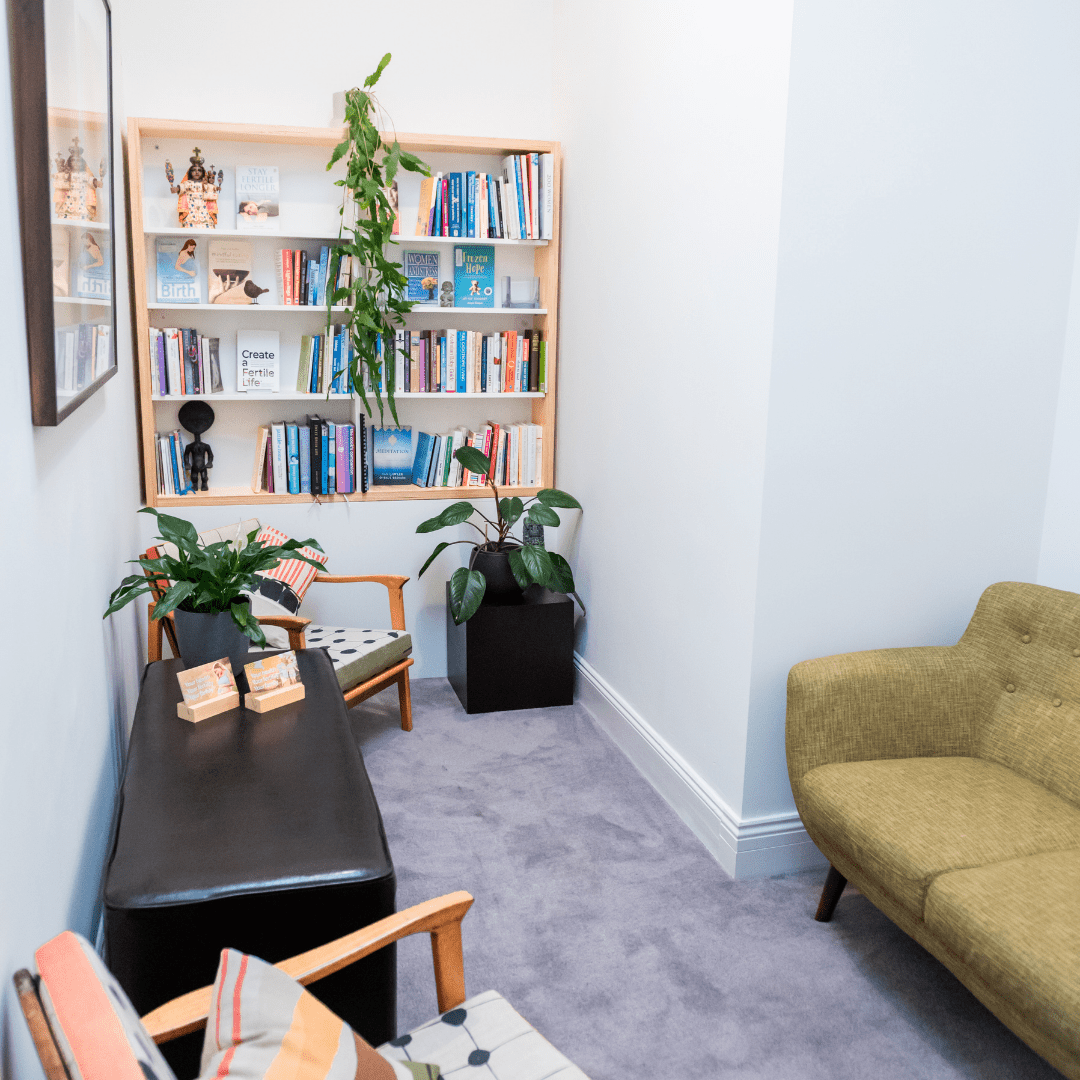
You may have noticed the gorgeous library of health, fertility and self help books that lives on the wall of the upstairs waiting room at Fertile Ground. 

Did you know that it’s a shared library? Meaning – you are most welcome to take a book or two, read them and bring them back/keep them when you’re done. You’re also welcome to add any health / fertility / pregnancy / baby / self help related books you have at home that you wish to recirculate into the community. Take a wander through the Holistic Health Library next time you’re in.

Love & Snowflakes

Your MA 💕

What is IUI & do you Qualify?

What’s your Fertility Plan and do you qualify for IUI?

Welcome to this free 6-part article series designed to help you determine your fertility plan and understand the steps you can take to optimise your fertility outcomes. Below you’ll find Part 5 – “What is IUI & do you Qualify?” If you’ve already read articles 1 to 4, feel welcome to skip this intro and get stuck into part 5 below. If this is, however, your first time finding out about this series – please read on to learn what it’s about, how it can help you and what to expect over the coming weeks.

Over this free 6 week article series we are going to discuss all potential options for those of you who are:

  • single, 
  • in same-sex relationships, 
  • are gender non-conforming, 
  • or are in a heterosexual relationship.

In these articles I will address information around:

  • trying to conceive, 
  • options if you have been struggling to conceive, 
  • considerations for those of you thinking about IVF, 
  • considerations for those of you currently undergoing IVF treatment,
  • how beneficial naturopathy can be in optimising your fertility outcomes.

Opportunity to Ask Me Questions – LIVE

After each article release, you have the option to submit any questions you may have by 7pm Monday evening to the Create A Fertile Life Facebook group. If you’ve not yet joined that private group you are welcome to go there and request to join.

If you wish to submit your questions anonymously, you can private message the Fertile Ground Health Group Facebook page and admin will forward them to me. 

Each Tuesday, I will be answering your questions live in this Create a Fertile Life Facebook group at 7pm AEDT, so we can all learn from each other.

Your Fertility Plan

Now, some of you may know exactly what your plan is, others may not have thought about it so concisely yet. Whatever stage you are at, I want you to provide you with the tools to determine what your fertility plan can look like and how you can optimise your outcomes with Naturopathy. Grab a pen and a piece of paper, or type in to a document on your phone/computer so that you can create the skeleton of the items that relate to YOUR individual journey and we will build on this each week over the 6 weeks of this series. 

I am excited to be on this journey with you. If you’ve already registered for the whole free package, take a sneak peek at part four below and check your inbox for the arrival of your full comprehensive article for this week (week 5).

If you’re just finding this free series now and would like access from part 1 all the way to part 6 – simply register here for your free access to the whole package.

Part 5 – What is IUI & do you Qualify?

What is intrauterine insemination (IUI)?

IUI is also known as Assisted or Artificial Insemination (AI), as it is the process of assisting sperm to inseminate into the uterus at ovulation. The two key aspects of IUI include washing the sperm to find the best quality sperm, and timing the insemination procedure to coincide with when you’re ovulating. (2)

Firstly, the sperm sample (from either a partner or known/clinic recruited sperm donor) is washed to find the most active and virile sperm. It is then inserted through the cervix and into the cavity of the uterus via a catheter at ovulation. You could say that the IUI process gives the sperm an advantage in quality, combined with a head start by selecting the highest quality sperm from the sample provided; with insemination increasing the number of sperm that reaches the fallopian tubes. While the sperm still need to find their way to the egg on their own for fertilisation, the greater the quality and number of sperm that reach the tubes, the greater chance of fertilisation occurring. (1,2) 

Secondly, your cycle is monitored to determine if/when ovulation is occurring. To refresh your memory, ovulation occurs when an egg is released from one of your ovaries and must occur in order for conception to be successful. In the same way that timing intercourse during your fertile window is important for couples whom can provide both the egg and sperm, IUI is conducted at the time of ovulation by closely monitoring ovulation using blood tests and ultrasound to track the developing follicle to determine when insemination will go ahead. 

Sounds easy, right? Reproduction always seems so straight forward on paper. But unfortunately for some, and particularly in a world where sperm quality is on the decline due to today’s way of living and environmental factors, it’s a lot more complex. So if IUI assists to find the best quality sperm prior to insemination, what if the quality of sperm is poor to begin with? 

If the quality of the sperm sample is poor, then it’s like selecting the ‘best of a bad bunch’ so to speak. Now that it’s week five and I’ve spent all this time going on about the importance of preconception care, please bear with me while I repeat myself… this is why preconception care is so important! We want to be able to holistically assess all the contributing factors to sperm quality to be able to control and optimise those variables as much as possible. We want to have the best quality sperm sample to select from in the first place. We want the best of the best! But more on this and egg quality later…

What does IUI feel like?

The IUI process is described as similar to a pap smear in sensation. A speculum is inserted into the vagina so the cervix can be visualised. A thin catheter containing the selected sperm is then passed through the cervix and into the uterus. The process takes a few minutes to complete, usually with minimal discomfort. IUI does not require sedation. (3,4)

Is IUI for you?

For single cis-women, or individuals or couples assigned female at birth who require donor sperm, IUI is the ART method that is most commonly used. IUI may also be indicated in cases of mild suboptimal semen volume, sperm count, and/or sperm motility, mild Endometriosis, cervical scarring or other concerns that may reduce sperm penetration into the uterine cavity, poor or absent cervical mucous, for those who cannot have regular or penetrative sex, infertility of unknown cause, and for individuals for which ovulation is absent or irregular. (3)

IUI is not indicated for significant sperm quality issues where a good sperm sample cannot be achieved in the andrology laboratory, or for individuals with poor fallopian tube functioning or blockages – these need to be open and functioning for the sperm to be able to reach the egg. (4)

In mild cases of poor sperm quality, while IUI washes and selects the most viable sperm and gives sperm a bit of a helping hand in helping them get closer to where they need to go, it in no way improves sperm quality parameters on a cellular level. This is why focusing on improving all parameters of sperm quality where possible is such an important preconception consideration prior to undertaking IUI. 

For those of you using your partner’s or known donor sperm, I hope this gives you some encouragement to at least have a conversation with them about undertaking a semen analysis prior to giving their sample for IUI. Hopefully your partner is open to undertaking preconception care alongside you, and your donor may or may not be open to it. But it’s absolutely worth a discussion to optimise your outcomes and require less samples from them! Even better if your donor is open to 3 months (only 12 weeks) of preconception care to improve their sperm quality. If they need a little convincing, I highly recommend giving them a copy of our book, Create A Fertile Life. It is evidence-based, easy to read, and you can read from any chapter that is relevant to your circumstances. Purchase your copy and get a head start.

For those of you using clinic-recruited donor sperm, it emphasises the importance of undertaking your own preconception screening and individualised preconception care so that we can optimise egg quality and your endometrial lining to increase the chances of successful implantation.

So, you’ve determined IUI is for you or it has been recommended by your fertility specialist. Did you know that IUI can be performed with or without…

Want to keep reading? Sign up to get instant free access to Sage’s preconception article series and find out about the intricacies of egg freezing, your menstrual cycle, sperm donor considerations, intercourse, conception, egg quality, egg carrying considerations, assisted reproductive technology, home insemination, the answers to your questions and more.

Written by Fertile Ground fertility Naturopath, Sage King.